
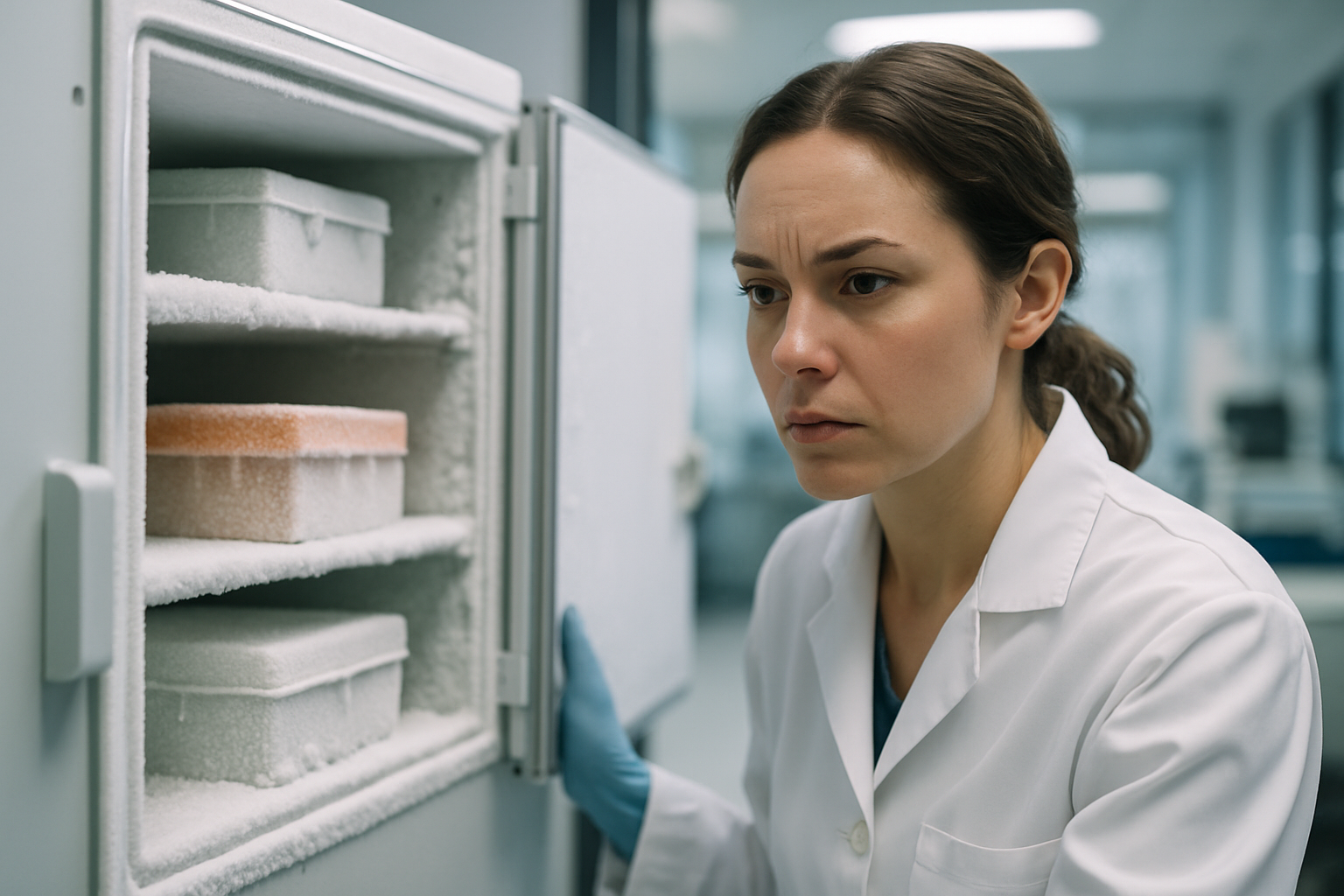
Monitoring ultra-low -80\sensors fall short for lab freezers
Wireless temperature monitoring system for laboratory: a practical buyer's guide
A single temperature excursion can erase weeks of work. When a freezer fails overnight or a fridge door sits open during a busy restock, the samples, reagents, and vaccines inside don't announce the loss until someone opens the door hours later. By then, the decision is already made for you.
This guide focuses on what actually matters when choosing a wireless temperature monitoring system for a laboratory: continuous readings, compliance-ready records, and the ability to catch both equipment failures and staff-caused excursions before anything is lost. It's written for the people responsible when something goes wrong—lab managers, QA leads, and facility directors—rather than for a sales pitch.
Why temperature monitoring is non-negotiable in a lab
The math on a single excursion is unforgiving. A compromised vaccine lot, a batch of temperature-sensitive reagents, or an irreplaceable patient or research sample can represent thousands of dollars and, in some cases, work that simply can't be recreated. The financial hit is only part of it—there's also the downstream cost of repeated testing, delayed results, and lost trust.
On top of the direct loss sits compliance pressure. CLIA and CAP inspections, CDC vaccine storage guidance, and lab accreditation reviews all expect documented, continuous proof that storage stayed in range. A clipboard with two handwritten entries a day rarely satisfies that expectation anymore.
Labs really need to catch two different failure modes. The first is equipment breakdown—a dying compressor, a stuck defrost cycle, a power interruption. The second is human error, most often a freezer or fridge door left open too long while someone stocks or retrieves inventory. Continuous wireless monitoring is one of the few tools that addresses both at once.
What a wireless temperature monitoring system is and how it works
A wireless temperature monitoring system uses small sensors placed inside your fridges, freezers, incubators, and ambient storage rooms. Each sensor measures temperature—and often humidity—on a set schedule and transmits those readings wirelessly to a hub or gateway. The gateway forwards the data to a cloud dashboard you can view from any browser or phone.
Two things happen automatically. Every reading is logged and timestamped, building a continuous record without anyone writing anything down. And when a reading drifts outside the range you've set, the system sends a real-time alert so staff can respond before the contents are affected.
That's the core difference from a manual chart recorder or a clipboard log. Chart recorders capture a trace but still require someone to check, interpret, and file it. Clipboard logs depend on a person being present, awake, and accurate. A wireless system watches every unit around the clock and keeps the record for you.
Why continuous monitoring beats manual spot checks and chart recorders
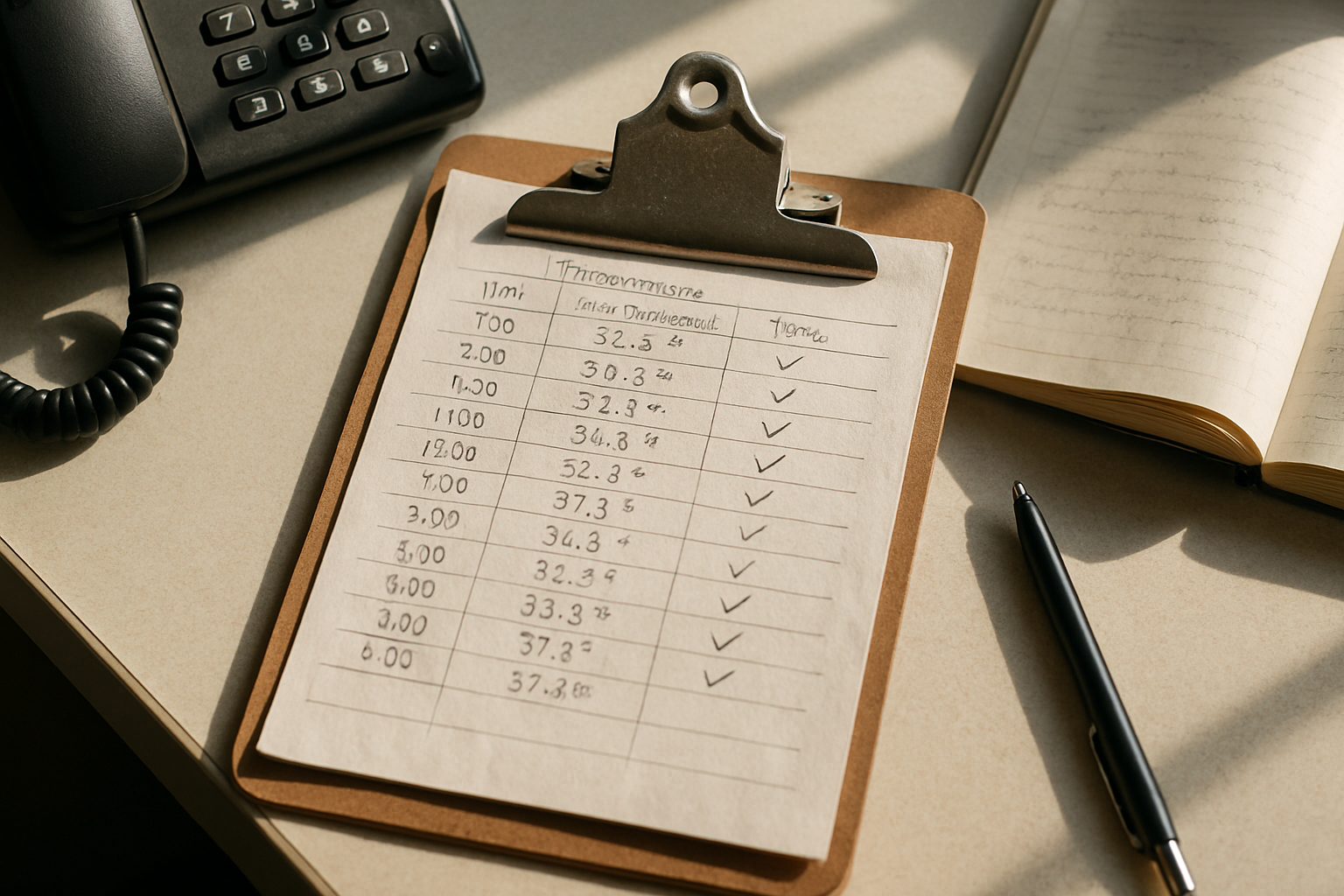
Manual checks share one fatal weakness: they only capture the moment someone happens to look. Overnight, over weekends, and across holidays—exactly when no one is in the building—a unit can fail and recover, or fail completely, without a single entry to show it.
Consider a fridge checked at 8 a.m. and 5 p.m. If it drifts out of range at 6 p.m. and recovers by 6 a.m., the log shows two perfect readings and hides twelve hours of unsafe storage. Twice-daily readings can mask an entire shift of exposure.
Continuous data does the opposite. It reveals slow drift and developing trends—a freezer that's creeping up half a degree each week—so you can service a unit before it fails outright. And because the record is digital, you eliminate transcription errors, illegible handwriting, and the gaps that appear whenever someone forgets to make the round. Our refrigerator temperature monitoring guide goes deeper on what to track and when to act.
How wireless installation avoids drilling and running wires
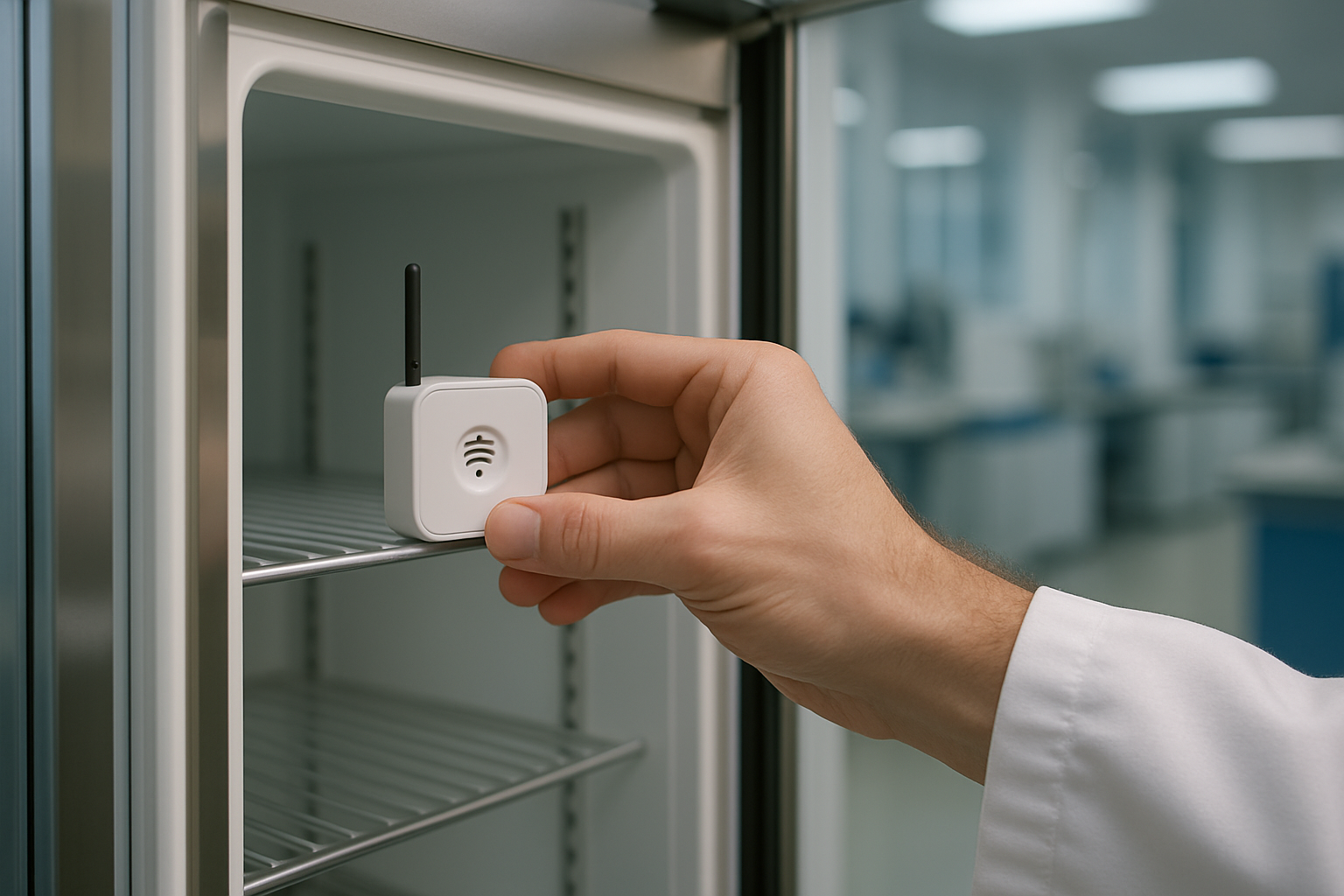
A common worry is that adding monitoring means modifying expensive equipment. With a wireless system, it doesn't. There are no holes drilled through equipment walls or door seals, and no wires threaded past gaskets that then fail to seal properly.
The sensor sits inside the unit, and the wireless signal passes through the door or wall to reach the gateway. That means you can outfit dozens of units without a facilities project, ladders, or downtime. It also makes wireless the practical choice for leased spaces where you can't alter the building, and for equipment still under warranty where drilling would void coverage. Sensor placement still matters for accuracy—our guide on where to place a sensor in a walk-in cooler covers the principles that apply to lab units too.
Choosing the right reading interval for lab equipment
The reading interval—how often each sensor takes and reports a measurement—determines how quickly the system can detect a problem. A longer gap between readings means a short excursion can start and end unseen.
Different units warrant different thinking. A large chest freezer holds its temperature for a while, so it drifts slowly. A small fridge opened frequently, or an incubator with a tight tolerance, changes faster and benefits from closer attention. The interval should be short enough to catch the fastest realistic change in each unit.
A 20-minute reading interval strikes a practical balance for most lab storage. It's frequent enough to catch a door left open or a compressor stumble, detailed enough to show recovery patterns, and gentle enough on the battery that the sensors last for years rather than months. Match the interval to how fast each unit actually moves, and you get useful detail without drowning in data.
Alerts: how staff learn about a problem before samples are lost
Monitoring only helps if someone finds out in time. Threshold-based alerts fire when a reading goes above a high limit, below a low limit, or otherwise out of the range you define for that unit. You set the boundaries; the system watches them continuously.
Alerts should reach people through more than one channel—text and email at minimum—with an escalation path so that if the first person doesn't acknowledge, the next one is notified. That matters most after hours, when the person nearest the lab may not be the one on the schedule.
Just as important is a delay window. A fridge briefly warms every time the door opens, and you don't want a text every time someone grabs a reagent. A short configurable delay lets normal door openings pass while still flagging a genuine problem. Decide up front who receives alerts, and make sure nights, weekends, and holidays are covered. For a deeper look at how alerting behaves when connectivity drops, see our comparison of WiFi versus cellular freezer alarms.
Catching personnel issues, not just equipment failures
This is where continuous monitoring earns its keep in a way most buyer's guides overlook. When a freezer door is left open too long during stocking, the temperature climbs and then recovers once the door closes. On a clipboard, that event never existed. On a continuous log, it's a clear spike.
Over time those spikes form patterns. If excursions cluster around a particular shift, a weekly restock, or the same time each morning, you're likely looking at a procedure problem, not a hardware problem. The recovery data—how fast the unit returned to range—tells you how the equipment is behaving and how long the door was actually open.
That evidence turns a guessing game into a coaching conversation. You can update stocking procedures, stage inventory before opening the door, or adjust workflow, then watch the pattern disappear. It also helps you tell the two failure modes apart: a compressor that's slowly losing capacity looks different from a repeatable human habit that happens at 7 a.m. every Tuesday.
Temperature and humidity ranges that matter for lab storage
Lab storage spans several regimes. Refrigerated storage typically targets 2–8°C for many vaccines and reagents. Frozen storage, ultra-low freezers, and controlled room-temperature areas each have their own targets. Incubators, by contrast, hold an elevated set point that must stay stable.
Humidity matters too. Certain reagents, test kits, and samples degrade in conditions that are too damp or too dry, so a sensor that reports both temperature and humidity gives a fuller picture of storage conditions.
The safest rule is to store to the manufacturer's and, for vaccines, the CDC's specific requirements for each product—these ranges are general guidance, not a substitute for the label. Our overview of vaccine refrigerator monitoring for clinics walks through the CDC storage and logging expectations in more detail.
Sensor and battery life and user replaceability
Maintenance overhead quietly determines whether a monitoring program survives. Sensors with a long battery life—around 10 years—mean you're not swapping cells across dozens of units every year.
When batteries do reach end of life, being user-replaceable matters. You shouldn't need a vendor service call or a shipped-back sensor to change a standard battery. Look for low-battery alerts as well, so a sensor never goes dark unnoticed and leaves a gap in the record.
Finally, the sensors themselves have to survive where they live. Ultra-low freezers and constant cold are demanding environments, so choose hardware rated to operate reliably inside the units you're actually monitoring.
How monitoring supports recordkeeping and audit readiness
Because every reading is logged automatically with a timestamp and stored in the cloud, your temperature record builds itself. When an inspector or accreditation reviewer asks for history, you export a report for the requested date range instead of digging through binders.
The system also documents the alert history: when a reading went out of range, who was notified, and—if your process supports it—what corrective action followed. That chain of evidence is exactly what auditors want to see.
The side benefit is time. Staff stop spending part of every shift on manual documentation, and the record is more complete and more accurate than a handwritten one could ever be. If your program also touches food-service storage, the same principles appear in our guide to logging cooling procedures for HACCP compliance.
How to compare wireless monitoring systems for your lab
When you evaluate options, weigh these factors against your real conditions rather than a feature checklist:
- Reading interval and alert flexibility — Can you set intervals and thresholds per unit, with delay windows and escalation?
- Installation effort and wireless range — Does the signal reliably pass through your equipment, and can you deploy without drilling?
- Battery life and replaceability — Long life, low-battery warnings, and batteries you can change yourself.
- Data retention, reporting, and export — How long is data kept, and can you produce audit-ready reports?
- Scalability — Will it handle more units and additional locations as you grow?
- Support and setup assistance — Is there help configuring thresholds and getting sensors placed correctly?
A system that scores well on these will keep protecting your samples long after the initial install.
Frequently asked questions
How often should lab freezers, fridges, and incubators be monitored?
Continuously. Rather than relying on twice-daily manual checks, a wireless system should take readings at a set interval—around every 20 minutes for most lab storage—so short excursions overnight or on weekends aren't missed. Match the interval to how quickly each unit changes temperature.
Can a wireless system detect a freezer door left open too long during stocking?
Yes. When a door stays open, the temperature rises and then recovers once it closes, producing a visible spike in the continuous log. Over time these spikes reveal patterns tied to shifts or restocking, letting you separate a genuine equipment fault from a repeatable staff habit and adjust procedures accordingly.
Do the sensors require drilling holes in my equipment?
No. The sensor sits inside the unit and transmits wirelessly through the door or wall to a gateway, so there's no drilling through equipment walls or door seals. That protects warranties and makes the system suitable for leased spaces.
How long do the batteries last and can I replace them myself?
Look for sensors with long battery life—around 10 years—and user-replaceable batteries so you don't need a vendor service call. Low-battery alerts warn you in advance so monitoring never lapses without notice.
Does continuous monitoring help with audit and compliance recordkeeping?
Yes. Readings are logged automatically with timestamps and stored in the cloud, and reports export for a chosen date range. Combined with a documented alert and corrective-action history, this supports CLIA, CAP, CDC vaccine storage, and accreditation reviews while cutting the staff time spent on manual logs.
Have Questions About VitaTemp?
Our team is here to help you with temperature monitoring solutions for your business.