
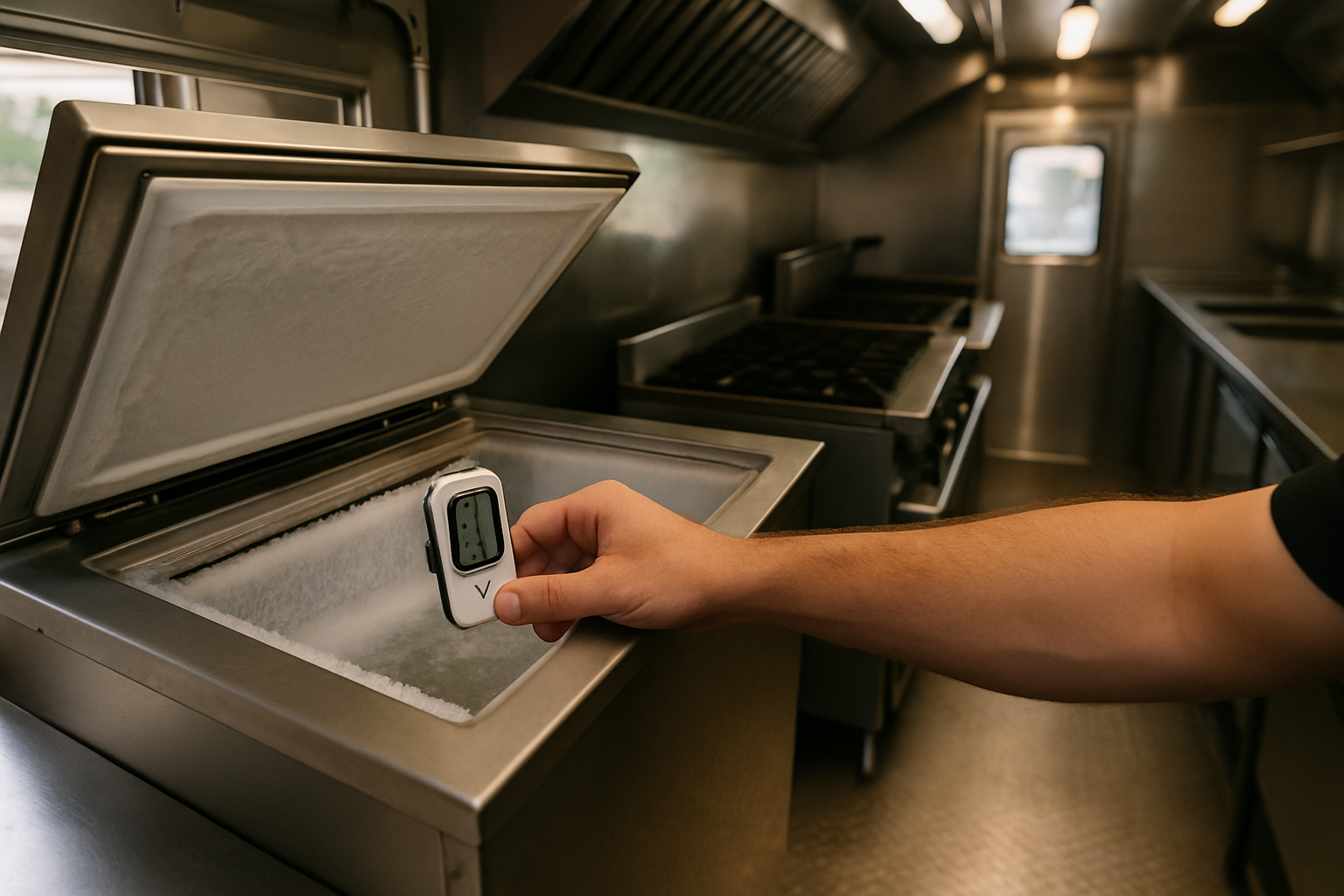
Keeping a food truck's fridge and freezer cold on the road: monitoring through power swings and cellular dead zones
Wireless freezer temperature monitor: a buyer's guide for restaurants, schools, and labs
A freezer failure rarely announces itself. Compressors fade slowly, gaskets wear, and a door propped open during a busy stocking run can push temperatures up long before anyone notices. By the time someone opens the freezer and feels the difference, the product inside may already be compromised. A wireless freezer temperature monitor closes that gap by watching your cold storage around the clock and telling you the moment something drifts out of range.
This guide is written for facility, kitchen, and lab managers who need dependable cold-storage oversight without hardwiring or clipboards. We'll cover what these devices do, how they compare to wired systems and manual logs, the features that actually matter, and how monitoring can flag operational problems, not just broken equipment.
What a wireless freezer temperature monitor does
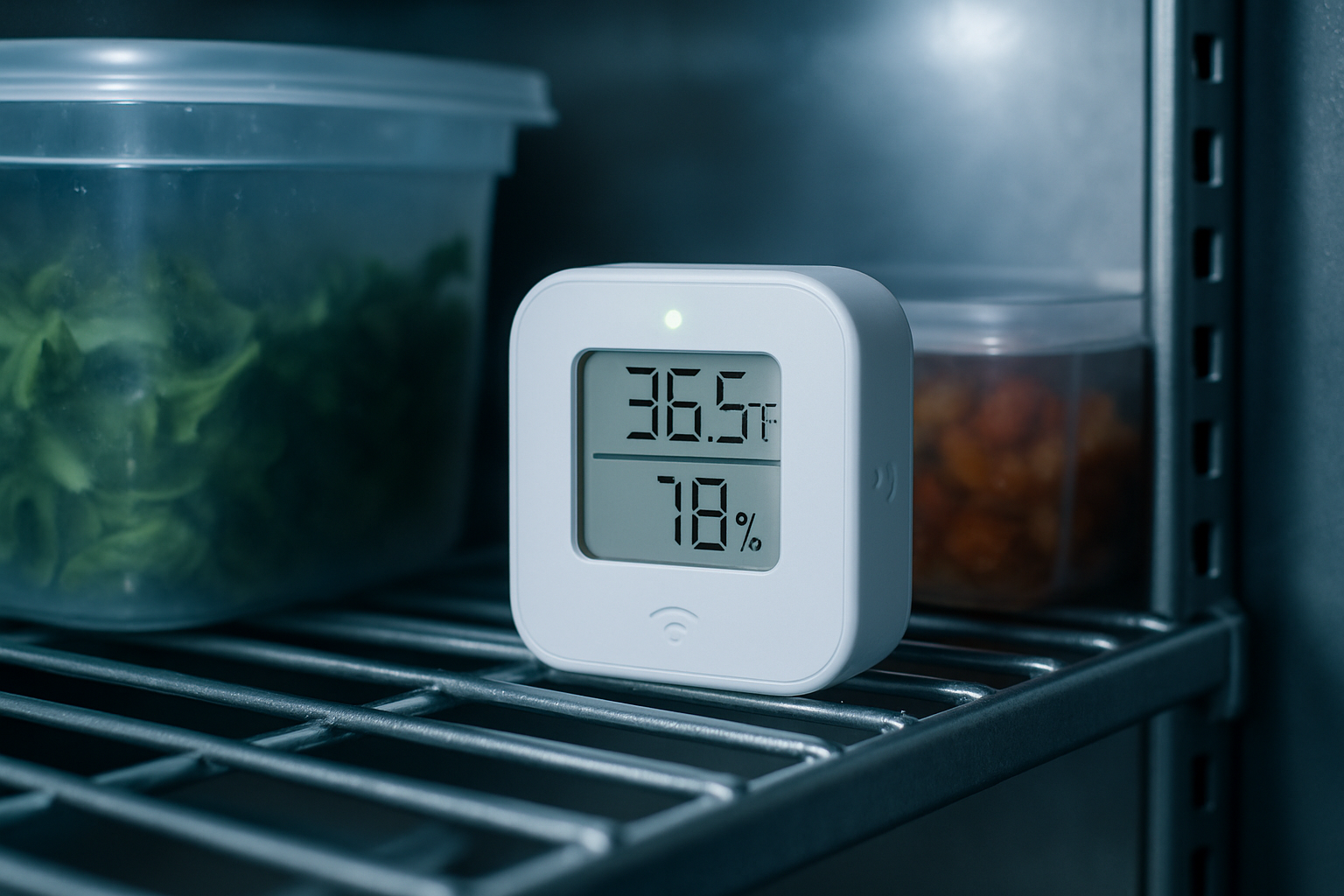
A wireless freezer temperature monitor is a small sensor placed inside a freezer, cooler, or refrigerator that measures temperature (and often humidity) and transmits those readings without any wiring. Instead of someone walking over with a thermometer, the sensor takes readings on a set schedule and sends the data to a cloud dashboard you can check from a phone or computer.
The workflow is simple: the sensor reads conditions inside the unit, records the value with a timestamp, and pushes it to a central system. Over time, that builds a continuous history of exactly how your cold storage behaved—overnight, on weekends, and during your busiest shifts.
Most people buy one to protect the cold chain, and that's the core job. But the data does more than confirm a freezer is cold. It reveals patterns: how quickly a unit recovers after a door opens, whether temperatures creep up at the same time every day, and whether a specific unit is slowly losing its ability to hold set point. That makes a monitor an operational tool as much as a safety device.
VitaTemp takes a reading every 20 minutes, which we'll use as a baseline throughout this guide. That interval is frequent enough to catch short-lived problems while keeping the system efficient and its battery long-lived.
Wireless vs. wired systems vs. manual temperature logs
There are three common ways to keep tabs on cold storage, and each carries real tradeoffs.
Manual temperature logs rely on staff writing down readings a few times a day. They're cheap to start, but labor-intensive and easy to skip during a rush. A handwritten log only captures a single moment, so anything that happens between checks—or overnight, or over a weekend—goes unrecorded. When an inspector asks for history, gaps and guesses don't inspire confidence.
Wired monitoring systems provide continuous readings but usually require drilling through freezer walls and running cable, often with an electrician. Installation is disruptive, and relocating a sensor later means redoing the work. For a facility that reorganizes storage or adds units, that rigidity is a headache.
Wireless monitors sit in the middle in the best way: no holes, no cable, quick placement, and continuous automated readings with remote alerts. You can move a sensor to a new unit in minutes. The main considerations are choosing a reliable connection method and keeping an eye on battery life—both of which we cover below.
If you're weighing recorded history against live alerting, our breakdown of temperature data loggers vs. real-time wireless monitoring walks through which approach fits different operations.
Features that matter when choosing a monitor
Use the checklist below to compare options honestly. Spec sheets list dozens of numbers, but only a handful change how the system performs day to day.
Reading frequency
How often a sensor reads determines what problems it can catch. A monitor that only checks every hour or two can miss a door left open during a stocking run, because temperatures may rise and recover between readings. More frequent readings give you a truer picture and let you spot short-lived excursions.
VitaTemp reads every 20 minutes, which reliably captures the gradual temperature climbs that signal a real problem while still preserving battery life. Many competing devices read far less often to conserve power.
Battery life and replaceability
Battery life is easy to overlook until a sensor dies and takes your monitoring offline. Short-lived or sealed batteries mean recurring replacements, service calls, or units that go dark without warning.
VitaTemp's battery lasts about 10 years and is user-replaceable. When it eventually needs changing, you swap it yourself—no technician, no downtime, no coverage gap.
Alerting
The point of monitoring is action. Look for threshold-based alerts that fire when a temperature crosses a limit you set, whether that's a freezer climbing above 0°F or a lab fridge drifting outside 2–8°C. Fast, direct notifications let staff respond before product is lost rather than discovering the problem the next morning.
Humidity data
Temperature isn't the whole story. Humidity affects storage quality, contributes to condensation and frost buildup, and matters in spaces like dry storage and reagent rooms. A monitor that captures humidity alongside temperature gives you a fuller view of storage conditions. VitaTemp records both from the same sensor. If humidity is a concern in your ambient storage, our dry storage temperature and humidity guide covers the zone most kitchens forget.
Installation
The best sensor is one you can actually deploy quickly. Wireless, no-drill placement means you set the unit inside, confirm it's reading, and you're done. No electrician, no facility downtime, and the freedom to reposition sensors as your storage layout changes.
Catching personnel issues, not just failing equipment
Here's what most monitoring vendors don't talk about: temperature data reveals how your team works, not just how your equipment performs.
A door left open too long during stocking shows up as a gradual temperature rise followed by a recovery once it's closed. If that pattern appears every morning at delivery, you're not looking at a failing freezer—you're looking at a workflow that needs adjustment. A failing compressor, by contrast, tends to show a steady climb that doesn't recover, or temperatures that slowly drift higher over days and weeks.
Being able to tell those two situations apart is genuinely useful. Instead of calling for repair every time you see a warm reading, you can read the trend and diagnose the cause. When the data points to behavior, you can coach staff, adjust stocking procedures, or add a reminder to close the door between trips. When it points to hardware, you can schedule service before the unit fails completely.
This is the operational payoff that pure spec-sheet monitoring misses.
How different industries use wireless monitoring
The same technology serves very different needs.
Restaurants rely on walk-in coolers and freezers that get opened constantly during prep and service. Monitoring protects food safety, documents compliance, and flags the busy-period door habits that quietly waste energy and threaten product. Our guide on temperature monitoring for restaurants and cafeterias goes deeper on food-service specifics.
Schools run cafeteria cold storage with limited staff and long stretches of no coverage—nights, weekends, and extended breaks. Automated alerts mean a freezer problem over a holiday weekend gets caught before Monday, instead of after thousands of dollars of milk and food have spoiled.
Medical labs hold samples and reagents to tighter tolerances, where a short excursion can ruin irreplaceable material. Continuous readings and audit-ready history support strict documentation requirements. Our lab refrigerator monitoring guide covers keeping units in the 2–8°C range for clinical and research settings.
How alerting and response works

An alert triggers when a reading crosses a threshold you've defined for a given unit. Because VitaTemp reads every 20 minutes, an excursion is flagged promptly rather than sitting unnoticed for hours.
Notifications reach the people responsible—managers, kitchen leads, or lab staff—so someone can act quickly. Escalation options mean that if the first person doesn't respond, the alert can move up the chain rather than being missed.
The goal is turning a warning into a fast fix: move product to a working unit, prop a warm door closed, or call for service before a slow decline becomes total loss. For a closer look at how alarms function and what to prioritize, see our freezer temperature alarms guide.
Installation and setup expectations
Getting started is deliberately simple:
- Place the sensor inside the freezer or cooler. Positioning matters—our note on where to place a sensor in a walk-in cooler helps you get accurate readings.
- There's no drilling, no cable, and no electrician. The system is wireless, so you're not cutting into insulation or running conduit.
- Confirm the sensor is transmitting, and readings begin flowing to your dashboard on the 20-minute schedule.
Within minutes you have live visibility, and the historical record starts building from the first reading.
Compliance and inventory protection
Automated logs replace the clipboard entirely. Every reading is timestamped and stored, giving you audit-ready temperature history for health inspections and lab documentation without asking staff to remember to write anything down.
Just as important, early warnings prevent loss. Catching a slow temperature climb at the first sign lets you save inventory that manual checks would have missed. Over a year, avoiding even one spoiled walk-in or ruined batch of reagents often justifies the system on its own.
Getting started with VitaTemp
VitaTemp brings together the features that matter most for cold-storage monitoring: no-drill wireless installation, readings every 20 minutes, humidity data alongside temperature, and a roughly 10-year, user-replaceable battery that keeps your monitoring running without service calls.
The next step is straightforward—place a sensor, connect it, and start seeing your cold storage in real time. To begin monitoring your freezers, coolers, or lab refrigerators, contact VitaTemp and we'll help you get set up.
Frequently asked questions
Do I need to drill holes or hire an electrician to install a wireless freezer temperature monitor?
No. VitaTemp is fully wireless, so there's no drilling, no cabling, and no electrician required. You place the sensor inside the unit, confirm it's transmitting, and readings begin flowing to your dashboard. You can also relocate sensors as your storage layout changes.
How long does the battery last and can I replace it myself?
The battery lasts about 10 years and is user-replaceable. When it eventually needs changing, you can swap it yourself without a technician or a service call, so your monitoring never has to go dark.
How quickly will I be alerted if a freezer temperature rises?
Because VitaTemp reads every 20 minutes, excursions are flagged promptly. When a reading crosses a threshold you've set, notifications go out to the responsible staff, with escalation options if the first person doesn't respond—so action happens before product is lost.
Can the system tell the difference between a failing freezer and a door left open?
The data lets you distinguish them. A door left open typically shows a gradual rise that recovers once it's closed, often at a predictable time of day. A failing unit tends to show a steady climb that doesn't recover. Reading those patterns helps you decide whether to coach staff or schedule repair.
How does automated monitoring help with health and lab compliance?
Every reading is timestamped and stored automatically, giving you a complete, audit-ready temperature history without manual logs. That documentation supports health inspections and lab requirements, and the continuous record fills the overnight and weekend gaps that handwritten checks leave behind.
Have Questions About VitaTemp?
Our team is here to help you with temperature monitoring solutions for your business.