
What is the temperature danger zone for food, and how to stay out of it
What is the temperature danger zone? A food-safety guide for commercial kitchens
Every foodborne illness complaint, failed inspection, and batch of tossed inventory traces back to one idea: food that spent too long at the wrong temperature. Understanding the temperature danger zone—and, just as important, knowing how to keep food out of it—is the foundation of food safety in any restaurant, cafeteria, or commercial kitchen. This guide covers the exact limits, the science behind the risk, the holding rules you need to follow, and the practical ways food ends up unsafe in a busy kitchen.
What is the temperature danger zone?
The temperature danger zone is the range between 40°F and 140°F (4°C–60°C) where bacteria grow fastest. Food held in this range gives pathogens the warmth they need to multiply to dangerous levels.
The FDA Food Code and ServSafe training both use this range as the baseline for their food safety rules. Nearly every holding, cooling, and cooking guideline in your health code exists to move food through this zone quickly or keep it out entirely.
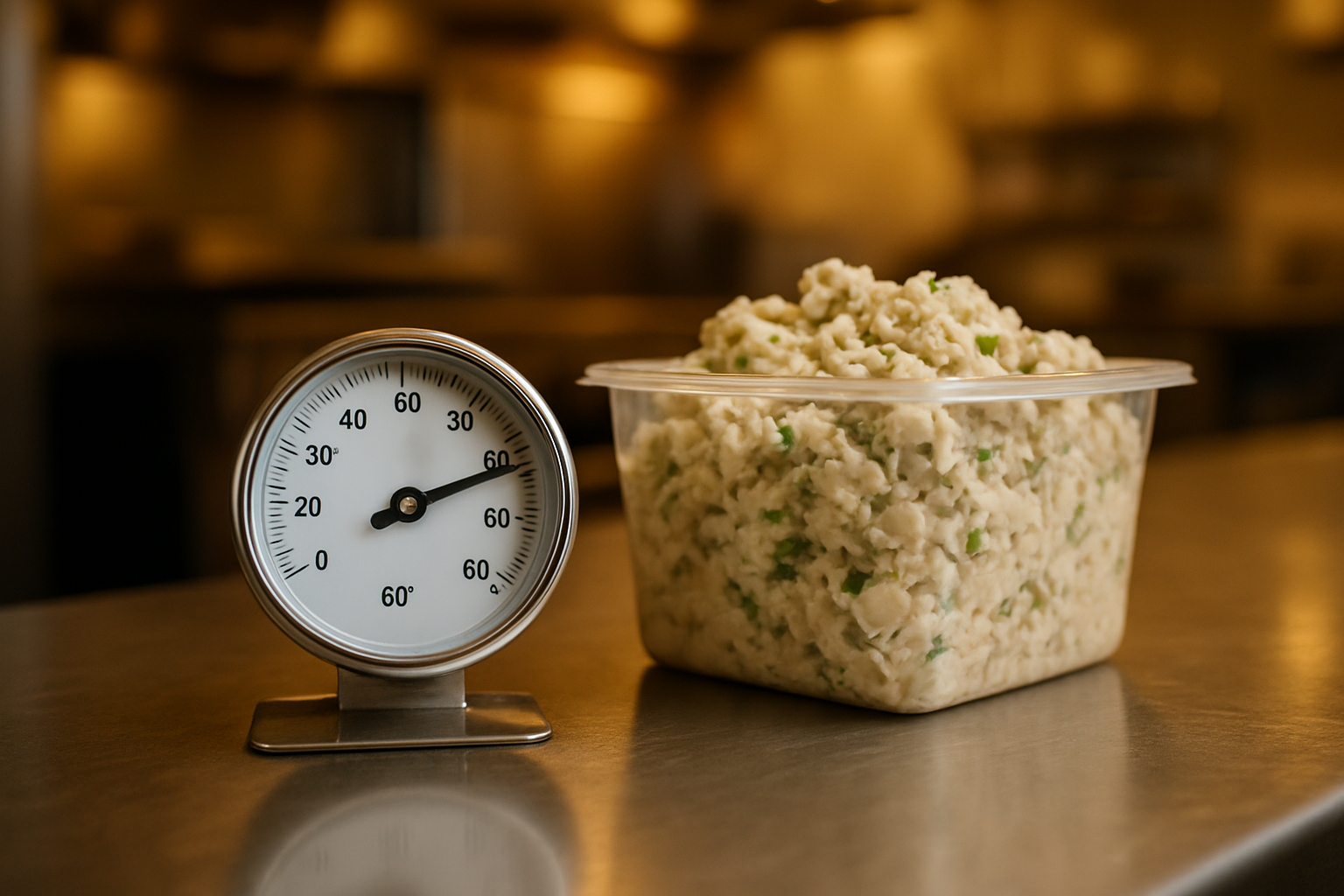
The most dangerous part is that food in the danger zone gives you no warning. A container of chicken salad held at 60°F for several hours can look, smell, and taste completely normal while carrying enough bacteria to make a room full of people sick. You cannot rely on your senses.
Because this single concept underpins so many rules, it also underpins most health-code violations in food service. Improper hot holding, slow cooling, and coolers running warm are all just different ways of saying the same thing: food spent too long in the danger zone.
Why the danger zone is dangerous: how fast bacteria multiply
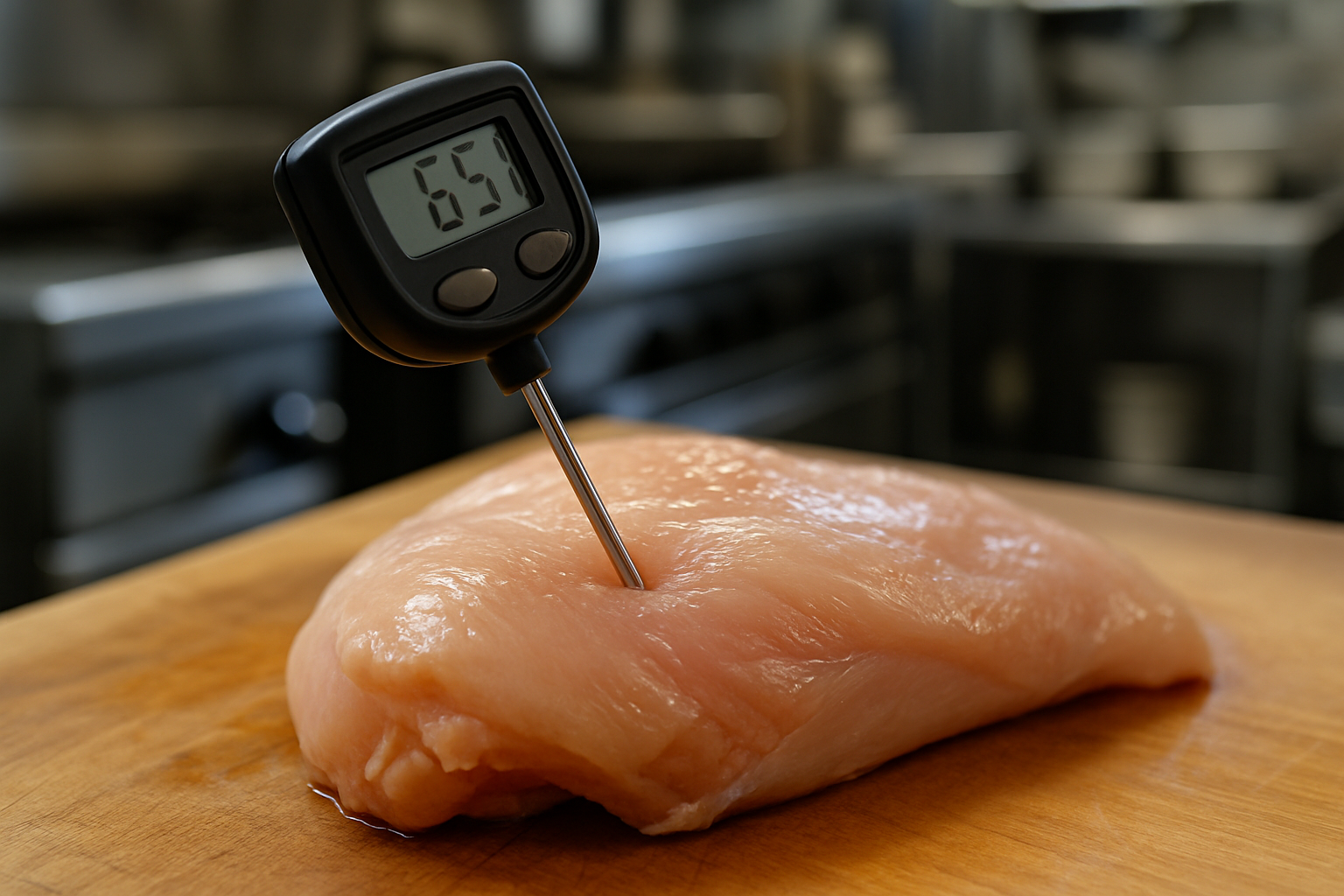
The reason the danger zone matters so much comes down to speed. Under ideal conditions, common pathogens such as Salmonella, E. coli, and Listeria can double roughly every 20 minutes.
That doubling adds up fast. A small, harmless starting population can multiply into millions of cells within a few hours. What began as a safe portion of food quietly crosses the threshold into a dangerous one—often well before anyone notices.
Most of these pathogens cannot be seen, smelled, or tasted. There is no visible slime, no sour odor, no obvious sign. That is exactly why time and temperature control matters more than a visual check.
While the full zone runs from 40°F to 140°F, the peak-danger "rapid growth" window is often cited around 70°F to 125°F. Food sitting at room temperature or in a lukewarm holding unit is in the worst possible range.
How long can food safely stay in the danger zone?
Time is the second half of the equation. The widely used 2-hour rule says that any TCS food (time/temperature control for safety food, such as meat, dairy, cooked rice, cut produce, and prepared dishes) left in the danger zone for more than two hours should be discarded.
When ambient temperatures climb above 90°F—think of a hot kitchen line or an outdoor event—that window shrinks to the 4-hour rule. In these conditions, food should be discarded after four hours total, and many operators apply an even tighter limit.
The critical detail most staff miss: time in the danger zone is cumulative. It adds up across every stage of handling—the minutes during delivery, the time on the prep table, the transport to a service station, and the period on the line. Food does not reset its clock each time it moves.
When you are unsure how long something has been exposed, throw it out. The cost of wasting one pan of food is trivial compared to the cost of a foodborne illness outbreak, a lawsuit, or a shutdown.
Safe cold and hot holding temperatures
Keeping food safe means keeping it firmly on one side of the danger zone or the other.
- Cold holding: Keep food at or below 40°F. Many jurisdictions require 41°F or lower, so check your local code and set your target accordingly.
- Hot holding: Keep food at or above 140°F. Some codes specify 135°F as the minimum. Steam tables and holding cabinets must be hot enough to maintain this, not just reheat.
Freezer storage should hold food at 0°F or below. Freezing stops bacterial growth, but it is important to understand that it does not kill bacteria. Pathogens go dormant in the freezer and resume multiplying once food thaws back into the danger zone.
Cooking and reheating carry food through the zone quickly and destroy pathogens if you hit the right internal temperatures. Reheat previously cooked TCS food to 165°F before hot holding, and follow the specific cooking minimums for each protein.
Cooling is where many kitchens fail, because it moves food back through the zone. Use the two-stage cooling process: cool food from 135°F to 70°F within 2 hours, then from 70°F down to 41°F within 4 more hours. If the first stage isn't met, the food must be reheated or discarded.
How food ends up in the danger zone in a commercial kitchen
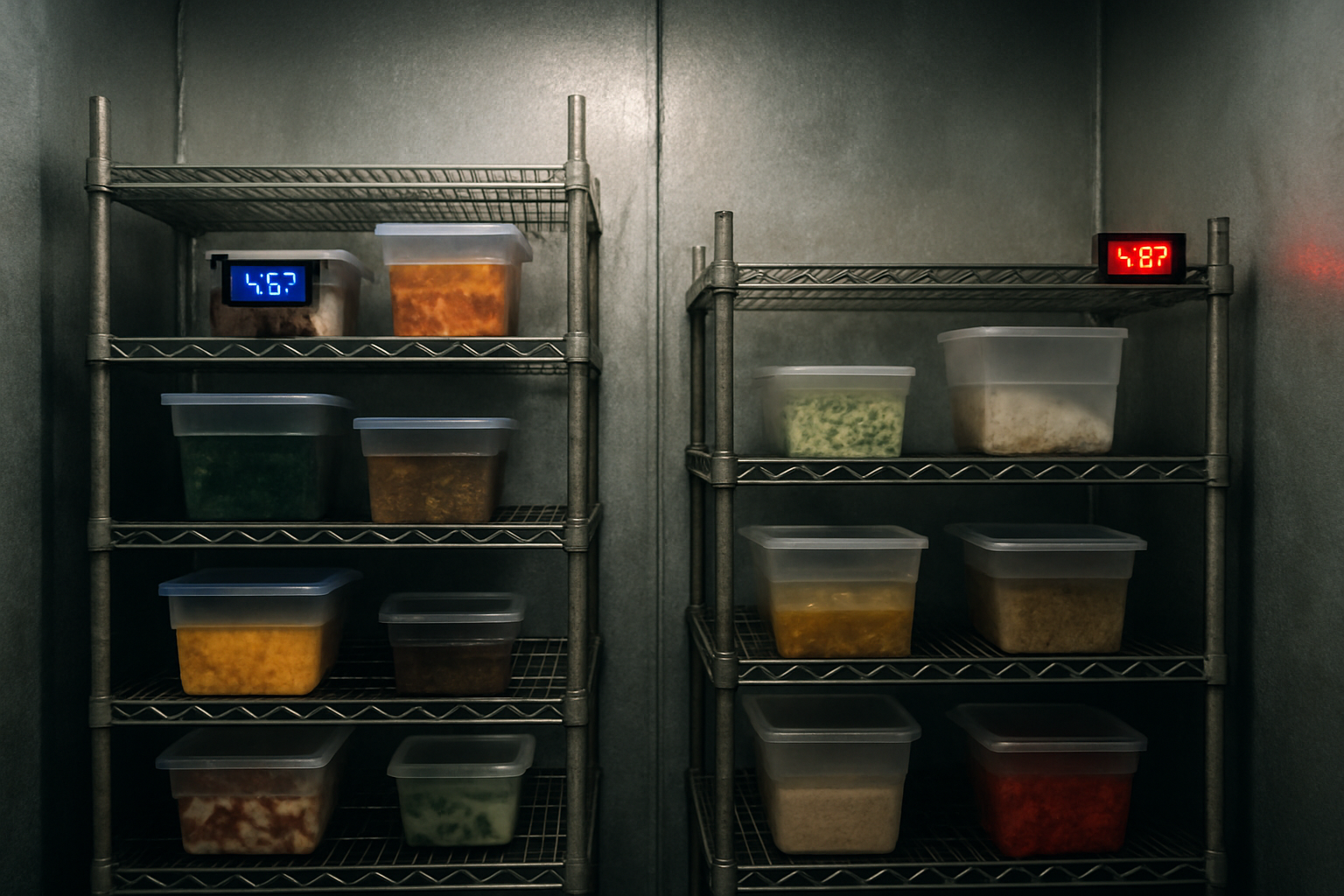
In practice, food rarely lands in the danger zone because someone ignored the rules. It happens through everyday operations:
- Doors left open too long. A cooler or freezer door propped open during stocking or a busy service can raise the internal temperature quickly, especially in a warm kitchen.
- Slowly failing refrigeration. Compressors and refrigeration units degrade over time. A unit can drift out of range overnight while everyone is home, then recover just enough by morning to look fine on a spot check.
- Overstocked units. Packing a cooler too full blocks airflow and creates warm pockets where some products sit well above the set temperature even when the display reads correctly.
- Deliveries and prep left out. Boxes of product waiting on a loading dock or prep items sitting on a counter accumulate danger-zone time before they're ever put away.
- Power outages and overnight failures. When no one is present, a tripped breaker or dead compressor can spoil an entire walk-in with no one there to catch it.
Monitoring and documenting temperatures for compliance
A HACCP plan treats temperature as a critical control point, which means you are required to keep temperature records as proof that food stayed safe. Documentation isn't optional—it's how you demonstrate compliance.
The problem is that traditional manual logs are infrequent, easy to skip on a busy shift, and blind to anything that happens overnight. A cooler checked at 9 a.m. and 5 p.m. could spend the entire night in the danger zone with no record and no one aware.
Health inspectors look for consistent, timestamped records that show your equipment held safe temperatures continuously. Gaps in a log, or entries that all look suspiciously identical, raise red flags.
Spot-checking with a probe thermometer a few times a day has real limits. It confirms the temperature at one moment, in one spot, but tells you nothing about the hours in between. That's the gap between the records you're required to keep and what actually keeps food safe: a paper log can satisfy an inspector while still missing the failure that puts your customers at risk.
How wireless temperature monitoring prevents violations
This is where continuous monitoring changes the picture. Instead of relying on someone remembering to check, a wireless sensor watches your equipment around the clock.
VitaTemp takes temperature and humidity readings every 20 minutes, catching the problems that fall between manual checks. When a unit starts drifting toward the danger zone, the system sends an automatic alert—giving you time to react before food is lost, not after.
Because it records continuous trends, the system detects failing equipment early. A compressor that's slowly losing efficiency shows up as a gradual upward drift long before it fails completely, so you can service it on your schedule instead of during an emergency.
It also reveals staff and procedure issues, like a freezer door left open too long during stocking. A sudden temperature spike that recovers on its own is a signal worth investigating, and continuous data makes those patterns visible.
Installation is wireless with no drilling required, so there's no damage to your units, and the battery lasts about 10 years and is user-replaceable. Just as important for compliance, the system keeps automatic digital records that satisfy HACCP documentation and give health inspectors exactly the timestamped history they want to see.
What to do when food has been in the danger zone too long
When you discover food may have been exposed, work through these steps:
- Assess the exposure. Use your time-temperature records to determine how long the food was actually in the danger zone. Continuous monitoring data makes this straightforward instead of a guess.
- Discard food that exceeded the limit. Any TCS food past the 2-hour (or 4-hour) window must be thrown out.
- Do not try to salvage it. Never re-cool or reheat food that has already been unsafe. Reheating kills bacteria but does not destroy the toxins some pathogens leave behind.
- Document the incident and corrective action. Record what happened, what you discarded, and what you did, as part of your HACCP plan.
- Investigate the root cause. Determine whether the problem was equipment failure or a procedure breakdown, then fix it so the same thing doesn't happen again.
The goal isn't just to react to one bad batch—it's to close the gap that let food reach the danger zone in the first place.
What are the exact temperatures of the danger zone?
The danger zone is 40°F to 140°F (4°C–60°C). Some local codes tighten the cold limit to 41°F and set the hot limit at 135°F, so always follow your jurisdiction's specific requirements.
How long can food sit out before it becomes unsafe?
Discard TCS food after 2 hours in the danger zone. When the surrounding temperature is above 90°F, that limit drops to 4 hours. Remember that this time is cumulative across all handling and prep.
What is the correct cold holding and hot holding temperature?
Cold holding should keep food at or below 40°F (41°F or lower in many jurisdictions). Hot holding should keep food at or above 140°F (135°F under some codes).
Does freezing food kill bacteria?
No. Freezing stops bacteria from multiplying but only makes them dormant. Once food thaws into the danger zone, any surviving bacteria resume growing, so proper handling after thawing still matters.
How often should I check food temperatures in a commercial kitchen?
Manual checks are typically done every few hours, but that leaves long gaps—especially overnight. Continuous wireless monitoring that reads every 20 minutes closes those gaps and alerts you the moment a unit drifts toward the danger zone.
Have Questions About VitaTemp?
Our team is here to help you with temperature monitoring solutions for your business.