
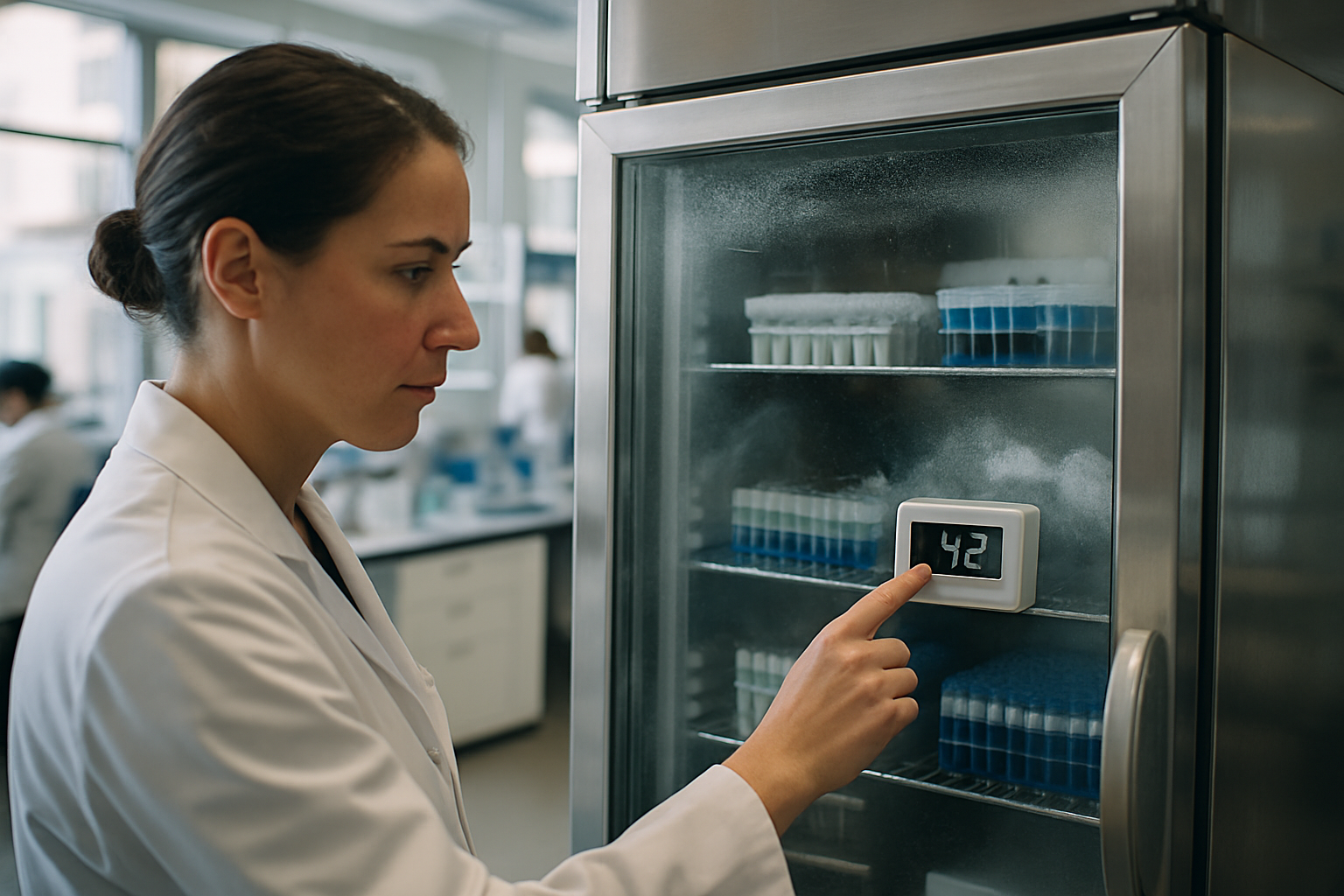
Keeping specimen and reagent refrigerators in range: 2–8°C monitoring for clinical and research labs
Lab refrigerator temperature monitoring: a practical guide to compliance and protecting your inventory
A lab refrigerator holding samples, reagents, or vaccines is only as reliable as your ability to prove it stayed in range. A compressor can fail at 2 a.m., a door can be left ajar during a busy stocking run, and a dial thermometer will tell you none of it until you happen to walk over and look. By then, the damage may already be done.
This guide covers what lab refrigerator temperature monitoring actually involves, the compliance standards that shape it, and why continuous wireless monitoring closes the gaps that manual logs and basic thermometers leave wide open. The goal is practical: protect sensitive inventory, pass audits without scrambling, and catch problems while they're still fixable.
Why lab refrigerator temperature monitoring matters
Lab refrigerator and freezer temperature monitoring is the continuous tracking of storage conditions for the materials your work depends on: patient samples, reagents, controls, calibrators, and vaccines. It answers a simple question at any moment, including the moments no one is watching: was this unit within its required range?
The consequences of an undetected excursion are rarely small. A refrigerator that drifts warm overnight can degrade reagents and invalidate the tests that rely on them. Samples exposed to out-of-range temperatures may be compromised beyond use, forcing recollection or repeat testing. Vaccine inventory that leaves its window may have to be discarded entirely. Each of these carries a cost in wasted material, lost time, and in some cases patient impact.
The value of monitoring is catching these problems early, not discovering them during an audit or after a freezer full of inventory is already lost. A dial thermometer or a clipboard log tells you what happened when someone looked. Automated wireless monitoring watches continuously and tells you the moment something goes wrong, which is exactly where manual methods fall short.
Temperature ranges and compliance standards for lab storage
Most lab cold storage falls into a few common ranges. Refrigerated storage typically targets 2–8°C. Standard freezers run roughly -15 to -25°C, and some labs also operate ultra-low freezers around -70 to -80°C for specific applications. Your specific targets should always follow the manufacturer's instructions for the materials you store.
Several oversight frameworks touch lab storage, and the details vary by lab type and accreditation. CLIA regulations govern clinical laboratory testing quality. CAP accreditation and Joint Commission surveys both examine whether storage conditions are controlled and documented. For vaccines, the CDC's storage and handling guidance sets clear expectations for monitoring and record retention. Rather than restate every clause, the practical takeaway is consistent across all of them: you need documented, retrievable temperature records that show your units stayed in range, and you need to demonstrate you acted when they didn't.
That documentation requirement is where many labs get caught. During an audit, being able to pull a complete, time-stamped history on demand is far stronger evidence than a binder of handwritten readings with gaps. If you handle vaccines specifically, our guide to vaccine refrigerator monitoring and CDC logging requirements covers that context in more detail.
Humidity matters too for certain reagents, test strips, and supplies that can degrade in overly damp or dry conditions. A monitoring approach that captures humidity alongside temperature gives you a fuller picture of storage integrity.
The hidden costs of manual logs and dial thermometers
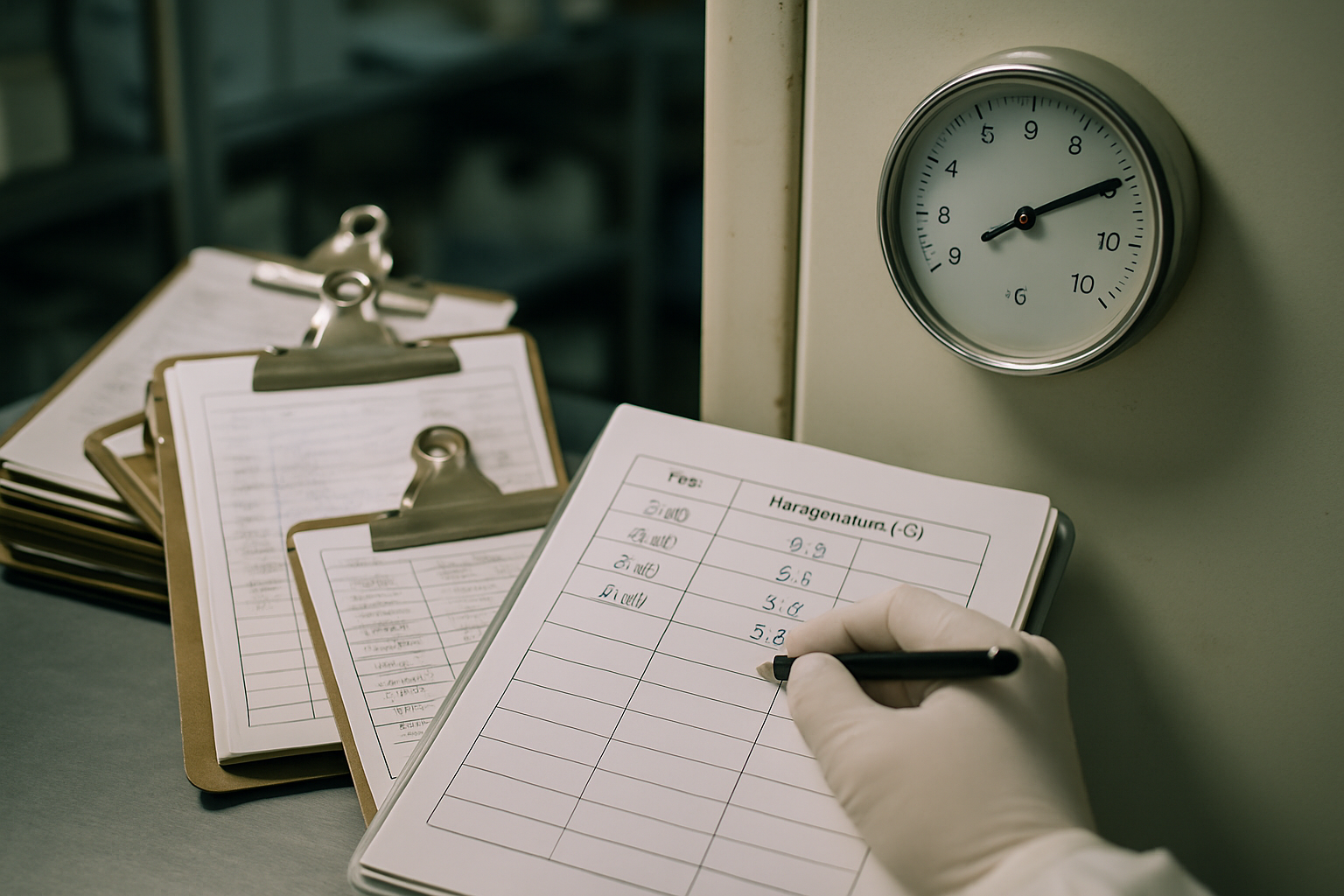
Manual temperature checks feel inexpensive because the cost is spread out and invisible. It isn't.
The biggest weakness is timing. If staff record temperatures twice a day, everything that happens in between is a blind spot. An excursion that starts Friday evening can run all weekend, undetected until Monday morning, by which point inventory may be a total loss. Overnight and holiday gaps are exactly when equipment failures go unnoticed.
There's also the labor. Someone has to walk the floor, open each log, read each thermometer, and write it down, every day. That time adds up across a year and pulls trained staff away from actual lab work.
Then there's the human factor. Entries get missed. Numbers get transposed. And the well-documented problem of "pencil whipping," filling in plausible readings after the fact, quietly undermines the entire compliance record. A log that isn't trustworthy is worse than no log during an inspection.
Dial thermometers compound the issue. They show current temperature only. They carry no history, reveal no trend, and can't tell you whether a unit has been slowly climbing for hours. The result is real financial exposure: lost inventory, repeat testing, and the risk of a failed inspection that can jeopardize accreditation. For a fuller comparison of recording approaches, see our breakdown of temperature data loggers versus real-time wireless monitoring.
How wireless temperature monitoring works
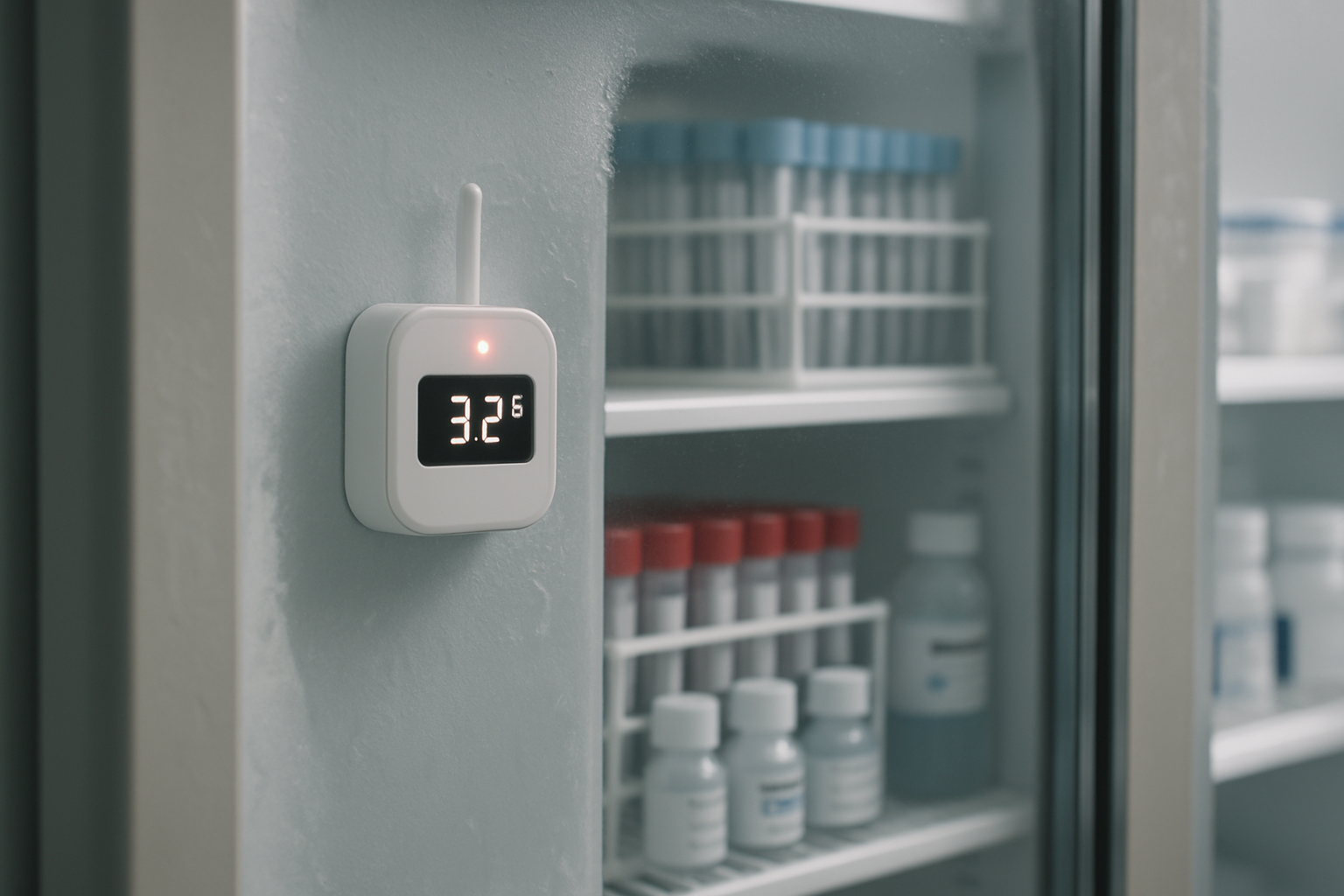
Wireless monitoring replaces the clipboard with sensors placed directly inside your refrigerators and freezers. Because the system is wireless, there's no drilling, no wiring, and no modification to existing equipment.
Each sensor takes readings automatically at regular intervals and sends them to a central dashboard. With VitaTemp, readings come in every 20 minutes, capturing temperature and humidity around the clock. That continuous stream builds a complete, tamper-resistant record, no missed entries, no after-the-fact edits, just an accurate history of what each unit actually did.
Reading frequency is what makes this work. A 20-minute interval catches short excursions that a twice-daily manual check would never see, like a warming trend that begins mid-afternoon or a door left open at closing. The data is accessible remotely, so you can review conditions and pull reports from anywhere rather than being tied to the physical log.
Features to look for in a monitoring system
Not every system offers the same protection. When evaluating options for lab refrigerator temperature monitoring, focus on a few things that genuinely matter:
- Real-time alerting across multiple channels. When a temperature crosses a threshold, you need to know immediately, not at the next scheduled check. Alerts should reach the right people through more than one method.
- Logging frequency. Shorter intervals catch more. A system logging every 20 minutes detects excursions a system checking hourly might smooth over.
- Long, user-replaceable battery life. A battery that lasts around 10 years and can be swapped by your own staff means far less maintenance and no service call just to keep a sensor alive.
- Humidity monitoring. For labs storing humidity-sensitive materials, tracking it alongside temperature closes another gap.
- Wireless, no-drill installation. Sensors should work with your existing refrigerators and freezers without facility modifications.
- Exportable records and reports. When an auditor asks for six months of history, you want it in a few clicks.
If connectivity reliability is a concern, our comparison of WiFi freezer alarms versus cellular monitoring is worth a read, since a system that goes silent when the internet drops isn't much protection.
Distinguishing equipment failure from human error
One of the most useful things continuous data does is tell you why an excursion happened, not just that it did. The shape of the temperature curve tells the story.
A gradual, sustained rise usually points to equipment: a failing compressor, a worn door seal, or a refrigerant issue. The unit is losing its ability to hold temperature, and the trend line climbs steadily. That's your cue to schedule maintenance before a full failure.
A brief, sharp spike that recovers quickly usually means a door was opened, often during stocking or restocking. On its own, that's normal. But when those spikes cluster around the same shift or the same time of day, the data is flagging a personnel issue, someone leaving the door open too long while loading inventory, for example.
Manual logs can't reveal any of this. Continuous readings turn a vague "the fridge was warm" into an actionable diagnosis. You can coach a specific staff member on door discipline, or you can catch a struggling compressor while it's still just struggling. The refrigerator temperature monitoring guide goes deeper on reading these patterns.
Setting alert thresholds and responding to excursions
Good alerting is about signal, not noise. A few practices keep it useful:
Set thresholds slightly inside your compliance limits. If your range is 2–8°C, alerting at, say, 7°C rather than 8°C gives you response time before you're actually out of compliance.
Configure delays for brief openings. A door opened for 30 seconds shouldn't page the on-call manager. A short delay before an alert fires filters out routine access while still catching real problems, so alarms stay meaningful and people keep responding to them.
Build an escalation path. Decide in advance who gets notified first, who's the backup, and how they're reached. An alert nobody sees is no better than no alert at all.
Document your excursion response. When an alert triggers, verify the reading, check the unit, relocate inventory if needed to protect it, and record what you did and when. This documentation is often exactly what auditors want to see, proof that you not only monitor but act.
Review the logged data afterward. Confirm the unit returned to range and use the history to support corrective action records. The full timeline shows how long inventory was exposed, which informs whether it's still usable.
Implementing monitoring in an existing lab
Rolling out monitoring in an operating lab is more straightforward than most teams expect, largely because there's no construction involved.
Start by taking inventory of what needs monitoring: refrigerators, standard freezers, ultra-low units, and incubators all qualify. Prioritize the units holding your most sensitive or expensive materials.
Sensor placement matters for accuracy. Position sensors to capture representative conditions rather than a spot near the door or a cooling vent that won't reflect the true storage environment. For ultra-low applications, note that standard sensors have limits worth understanding, which we cover in our guide to monitoring ultra-low -80°C lab freezers.
Because setup is wireless, there's no downtime, no drilling, and no facility modification. Sensors go in, connect to the dashboard, and start logging. From there, assign responsible staff and set a routine for reviewing data and responding to alerts. Finally, use the system to establish baseline records and ongoing reports so your compliance documentation is building automatically from day one.
Frequently asked questions
How often should lab refrigerator temperatures be recorded for compliance?
Many guidelines call for at least twice-daily documented readings, but that minimum leaves large gaps. Continuous monitoring that logs automatically, for example every 20 minutes, both satisfies documentation expectations and catches excursions that scheduled manual checks miss. Always confirm the specific frequency your accreditation body or the CDC requires for your materials.
What temperature range should a lab refrigerator maintain?
Standard refrigerated storage typically targets 2–8°C, though your exact range should follow the manufacturer's instructions for the specific samples, reagents, or vaccines stored. Freezers generally run -15 to -25°C, with ultra-low units around -70 to -80°C for specialized applications.
Can wireless monitoring be installed without drilling into existing refrigerators?
Yes. Wireless sensors are placed inside existing units and transmit readings without any drilling, wiring, or modification to the equipment. This avoids downtime and lets you add monitoring to refrigerators and freezers you already own.
How long do the sensor batteries last and can they be replaced?
VitaTemp sensor batteries last about 10 years and are user-replaceable, so your own staff can swap them without a service visit. Long battery life keeps ongoing maintenance minimal.
What should staff do when a temperature excursion alert is triggered?
Verify the reading, check the unit for an obvious cause such as an open door or a failing compressor, and relocate inventory to a safe unit if needed. Record the excursion, the actions taken, and the resolution, then review the logged data to confirm the unit returned to range and support your corrective action records.
Have Questions About VitaTemp?
Our team is here to help you with temperature monitoring solutions for your business.