
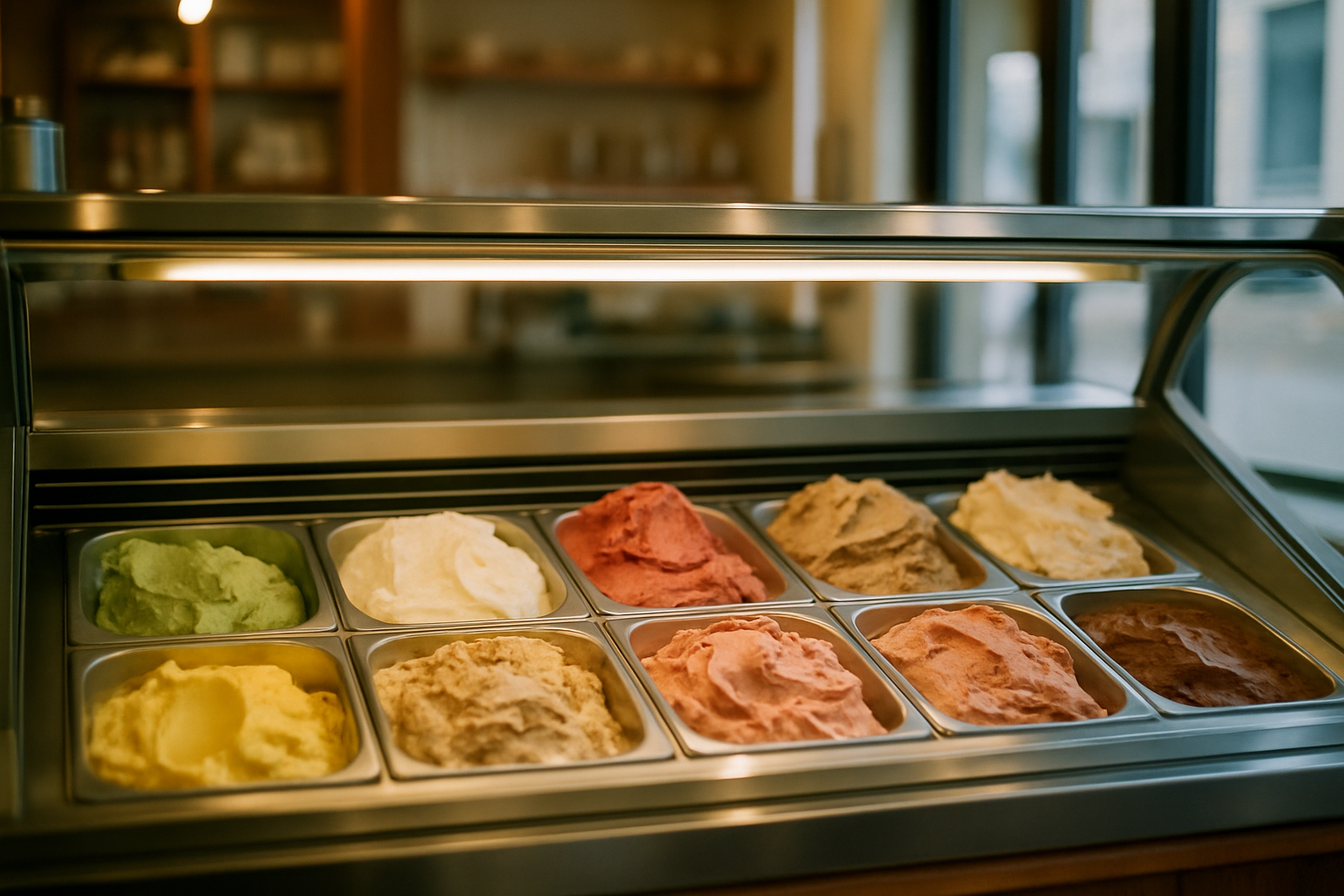
Ice cream and gelato shops: keeping dipping cabinets and display freezers at the right serving temperature
Ice cream display freezer temperature: the right range for scooping, quality, and safety
Ice cream sits in an awkward spot between food safety and customer experience. Keep it too cold and your staff fight bent scoops and long lines. Let it get too warm and you risk soupy, misshapen product and real safety problems. The ice cream display freezer temperature that works is a narrow, stable window, not the coldest number your case can reach. This guide walks through the right range, why it differs from deep storage, how temperature swings quietly destroy texture, and how continuous monitoring catches both equipment failures and the open-lid habits that cause most of the trouble.
The ideal temperature for an ice cream display freezer

For scooping and serving, most ice cream display (dipping) cabinets run around 0°F to 10°F (roughly -18°C to -12°C). This is a holding and serving target, not a long-term storage spec. The goal is product that holds its shape but still gives way cleanly under a scoop.
That's noticeably warmer than a storage or holding freezer, which should sit closer to -5°F down to -20°F for long-term stock. Deep storage keeps ice cream fully hard and stable; the display case tempers it to a servable consistency.
Display cases run warmer on purpose. Rock-hard ice cream is miserable to serve and dangerous to scoop over. A slightly higher set point softens the product just enough for clean, consistent portions.
There's no single universal number, though. Exact set point depends on fat content, overrun (the amount of air whipped in), and recipe. A dense, high-fat gelato scoops at a different temperature than a lighter, airier soft serve mix. Calibrate to your actual product: find the set point where a fresh tub scoops cleanly without melting on top, then hold it there.
Why ice cream needs a warmer temperature than frozen food
Ice cream isn't a solid block the way a bag of frozen vegetables is. It's essentially a frozen sugar solution, and sugar depresses the freezing point. Even well below 32°F, part of the water in ice cream stays unfrozen, which is exactly what keeps it soft enough to scoop. That's why a dipping cabinet target would leave a box of frozen fish rock-solid but leaves ice cream workable.
When it's too cold, the product turns rock-hard. Staff bend or break scoops, service slows during the rush, and there's a real risk of the surface melting under a warm scoop while the core stays frozen, which creates uneven texture in the tub.
When it's too warm, you get the opposite failure: soupy edges, loss of shape, puddling at the bottom of the tub, and accelerated spoilage and bacterial growth risk as the product softens past a safe serving consistency.
The target isn't the coldest possible setting. It's a stable serving window that keeps the product safe and scoopable at the same time.
How temperature swings ruin texture and cause ice crystals
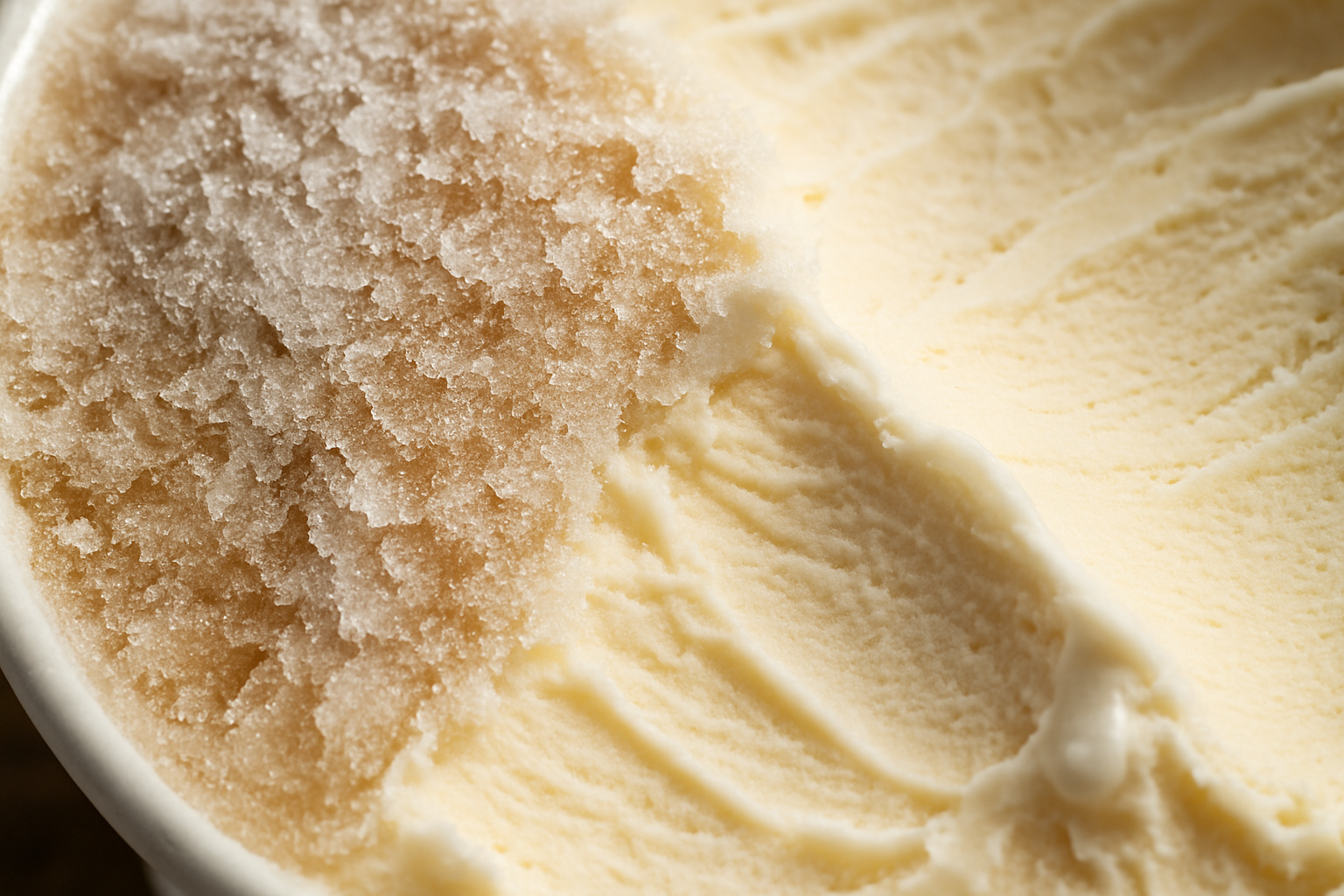
Stability matters more than any single reading. The main enemy of ice cream quality is the freeze-thaw cycle. Every time the surface partially melts and refreezes, the small ice crystals that give ice cream its smooth texture melt and recombine into larger ones.
The result is grainy, icy, sandy texture. Repeated cycling also drives freezer burn: moisture migrates to the surface and sublimates away, leaving a dry, crystallized crust and shrunken product.
Humidity and air exposure make it worse. When a lid stays open, warm humid air contacts the cold surface, condenses, and refreezes as surface crystals while the product slowly dehydrates underneath. That's why tracking humidity alongside temperature tells you more than temperature alone.
The takeaway: hitting the perfect number once means nothing if the case drifts up and down all day. Consistency is what preserves texture.
Food safety and health code expectations for frozen dessert displays
Frozen product should stay frozen. Hard-pack dipping cabinets, soft-serve machines, and novelty cases each have different handling rules, but the common thread is that product shouldn't be allowed to partially thaw and refreeze repeatedly.
Repeated partial thawing is both a quality problem and a safety one. As ice cream softens into the temperature range where microbes become active, you lose shelf life and increase risk, even if it later refreezes and looks normal.
Health inspectors generally expect documented temperatures and evidence of corrective action when something drifts out of range. They want to see that you noticed a problem and did something about it. Keeping clean, time-stamped records demonstrates control, and the same logging discipline applies across your operation, as covered in our guide to temperature monitoring for school cafeterias and food service. If you also handle hot-to-cold transitions in the kitchen, understanding the temperature danger zone for food rounds out the picture.
Common operational problems that cause temperature drift
Most display freezer temperature problems aren't caused by a broken compressor. They're everyday operational issues:
- Lids or sliding glass left open during busy service. The single most common cause. Every minute open lets warm, humid air in.
- Overfilling above the load line. Stacking product above the fill line blocks cold air circulation, so the top layer sits warmer than the thermostat reads.
- Defrost cycles. Every freezer defrosts periodically, which temporarily raises case temperature. Normally harmless, but it stacks badly with other issues.
- Poor placement. Cases near entry doors, ovens, heating vents, or direct sunlight fight a constant heat load they were never designed to handle.
- Maintenance neglect. Dirty condenser coils, failing gaskets, and worn door seals all let cold out and heat in, forcing the unit to work harder and still lose ground.
Why manual spot checks miss problems
The traditional answer is a clipboard and a twice-a-day temperature reading. It feels responsible, but it misses almost everything that matters.
A spot check captures a single moment. It tells you nothing about the overnight hours or the mid-shift swing that happened two hours after someone last looked. During peak hours, busy staff forget readings or skip them entirely, exactly when the case is most likely to drift.
A lid left open for 20 minutes during a rush can come and go completely unnoticed between two "normal" readings. And manual logs have a credibility problem: they're easy to backfill at the end of a shift and hard for anyone to verify. If you want a deeper comparison of recording approaches, see our breakdown of data loggers vs. real-time wireless monitoring.
What you actually need isn't a periodic snapshot. It's continuous visibility.
How wireless temperature and humidity monitoring protects your product
A wireless monitoring system watches each case around the clock so your staff don't have to. With VitaTemp, sensors take temperature and humidity readings every 20 minutes, building a continuous record of every display case instead of a handful of manual entries.
The real value is the instant alert. When a freezer starts drifting out of range, you hear about it before product is lost, whether that's an overnight compressor failure or a lid that got left open at closing. Catching it early is the difference between resetting a lid and throwing out a full case.
Tracking humidity alongside temperature flags exactly the conditions that drive ice crystals and freezer burn, so you can correct problems before they show up in the product.
It's also how you spot personnel issues. A lid left open during restocking or service shows up as a repeated warm spike at the same time of day. Instead of guessing whether the case is failing, you can see the pattern and coach the behavior.
Setup suits retail environments: it's wireless, so there's no drilling through case walls, and the battery lasts about 10 years and is user-replaceable, so you're not swapping sensors during service. The data history supports health inspections and makes equipment troubleshooting far faster. If you're weighing connection types, our comparison of WiFi freezer alarms vs. cellular monitoring explains which keeps alerting when the internet drops, and our freezer temperature alarms guide covers how alerting works in general.
What to do when a display freezer drifts out of range
When an alert comes in or a reading looks off, work through the simple causes first:
- Check the obvious. Is the lid or sliding glass fully closed? Is product stacked above the load line? Is anything blocking the air vents inside the case?
- Verify placement and heat sources. Has the case been moved, or has a new heat source (a propped door, a space heater, afternoon sun) appeared nearby?
- Inspect gaskets, seals, and coils. Damaged door seals and dust-clogged condenser coils are common culprits that build up gradually.
- Move product if the case can't recover. If the temperature keeps climbing, relocate product to backup storage before it's compromised. Don't wait to see if it fixes itself.
- Use alert history to diagnose. A single warm spike that recovers is usually a lid or defrost event. Repeated or worsening spikes point to a failing unit.
- Escalate to service. When temperatures won't stabilize despite the basics, get a technician in before you lose inventory.
The pattern in the data tells you whether you're dealing with a habit, a placement problem, or hardware. That's the difference between reacting and actually fixing the cause.
Frequently asked questions
What temperature should an ice cream display freezer be set to?
Aim for a serving range of roughly 0°F to 10°F (about -18°C to -12°C) for hard-pack dipping cabinets. That's warmer than deep storage freezers, which run closer to -5°F to -20°F. Fine-tune the set point to your recipe, since fat content and overrun change how firm the product feels at a given temperature.
Why is my ice cream too hard to scoop even though the freezer seems cold?
The case is probably set for storage rather than serving. Dipping cabinets need to run slightly warmer so the product tempers to a scoopable consistency. High-fat or low-overrun recipes also freeze harder, so they may need a slightly higher set point than a standard mix.
How often should I check display freezer temperatures?
Manual spot checks once or twice a shift leave long blind spots. Continuous monitoring with readings every 20 minutes gives you a full record and alerts you the moment a case drifts, which catches overnight and mid-rush problems that scheduled checks miss entirely.
Can a display lid left open really change the temperature that much?
Yes. An open lid lets warm, humid air flood the case, raising surface temperature quickly and driving condensation that becomes ice crystals and freezer burn. A lid left open through a busy rush or overnight is one of the most common causes of lost product.
How do I know if a temperature problem is the equipment or my staff?
Look at the pattern in your monitoring history. Warm spikes that repeat at the same time each day, like during stocking or closing, usually point to an open lid or human habit. Steadily rising temperatures or spikes that don't recover point to failing equipment that needs service.
Have Questions About VitaTemp?
Our team is here to help you with temperature monitoring solutions for your business.