
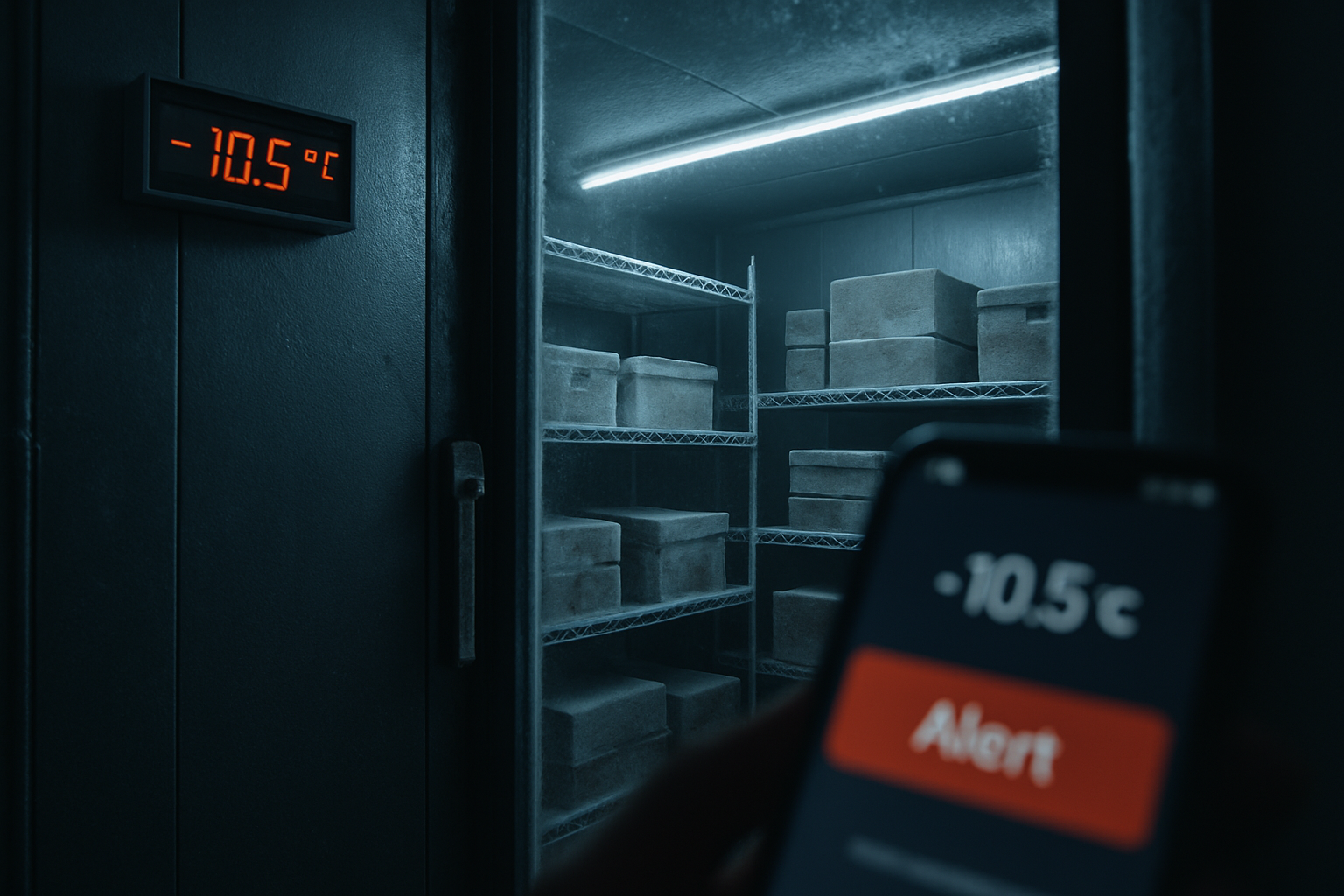
Freezer temperature alarms: how they work and how to choose one
Freezer temperature alarms: how to choose one that catches failures and human error
A freezer full of spoiled product is an expensive lesson. So is a failed inspection because your temperature logs don't hold up. A freezer temperature alarm is supposed to prevent both, but not every alarm does the job equally well. A cheap unit that beeps on the door does very little at 2 a.m. on a Saturday when no one is in the building.
This guide walks through what a freezer temperature alarm actually does, how a wireless monitoring system differs from a basic built-in beeper, and what features matter when you're protecting real inventory and staying compliant. It's written for the people who own that responsibility: facility and operations managers at restaurants, schools, and medical labs.
What a freezer temperature alarm actually does
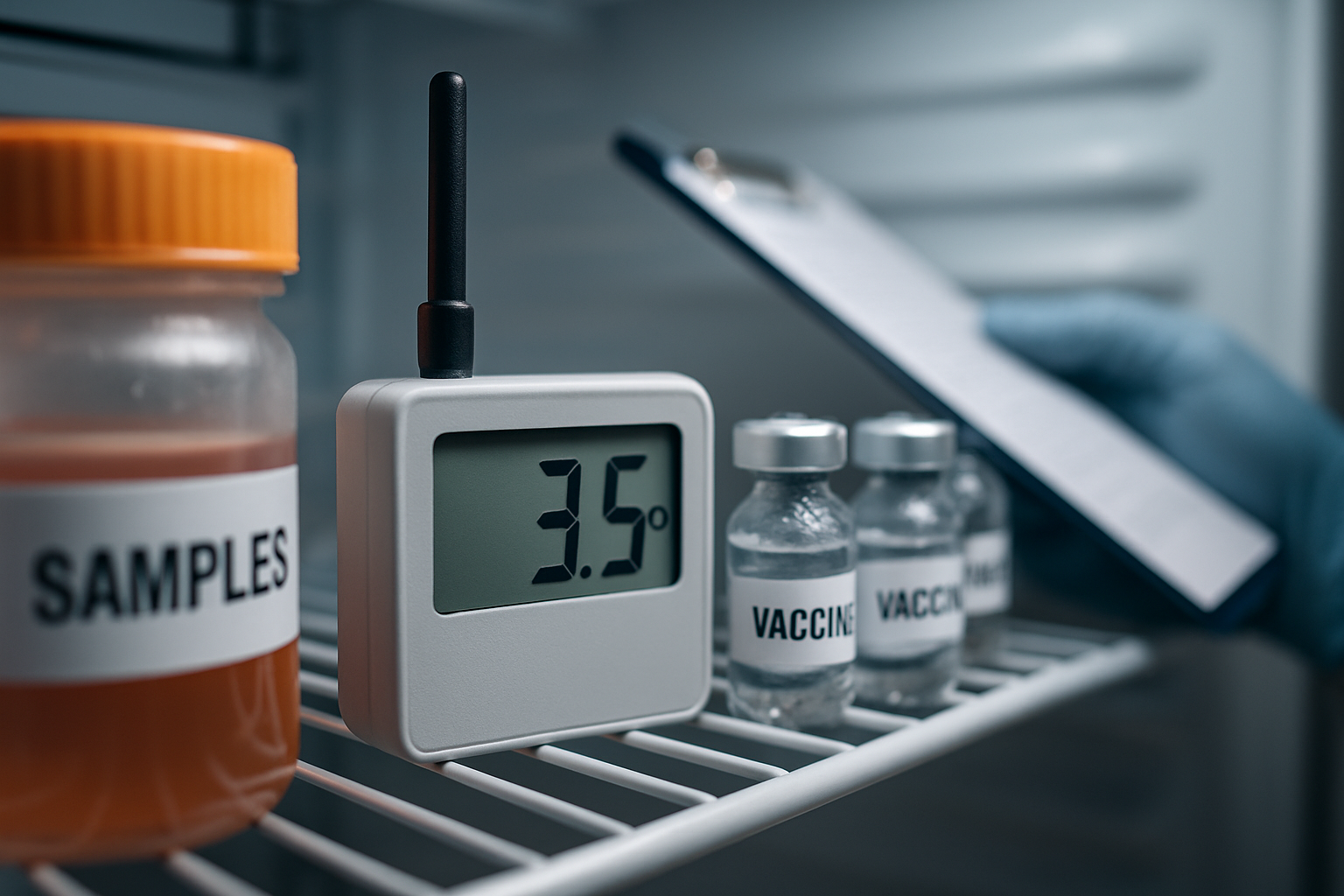
A freezer temperature alarm is a device that monitors the temperature inside a cold storage unit and warns you when it drifts outside a safe range. Many alarms also track humidity, which matters for both product quality and equipment health.
The basic mechanism is simple. A sensor reads the temperature (and often humidity) at regular intervals, compares each reading against thresholds you've set, and triggers an alert when a reading crosses the line. If your freezer should sit at 0°F and the sensor reads 12°F, the alarm fires.
That's where most alarms stop, and that's the problem. A beeper mounted on the unit is only useful if someone is standing close enough to hear it. If your walk-in fails overnight, the beeper sounds for hours to an empty kitchen while the product thaws.
The real goal isn't making noise. It's protecting inventory and staying compliant. An alarm that no one hears protects nothing. Keep that distinction in mind as you compare options, because it separates a device that beeps from a system that actually saves product.
Built-in beeper vs. wireless monitoring with remote alerts
Most freezers and refrigerators come with a built-in temperature warning of some kind. These are better than nothing, but they share a fatal limitation: they only alert on-site, and only while someone is close enough to notice.
Think about when freezers actually fail. Compressors don't wait for business hours. A unit that quits Friday evening has all weekend to ruin its contents before anyone opens the door Monday morning. By then the beeper has been chirping into an empty room for 60 hours, and your inventory is a total loss. Overnight, weekend, and holiday failures are exactly the ones that cost the most, and they're exactly the ones a built-in beeper is worst at catching.
Wireless monitoring changes the equation. Instead of sounding an alarm only where the freezer sits, the system sends alerts to your phone, email, or a mobile app no matter where you are. A manager at home on a Sunday gets the same warning they'd get standing in the kitchen.
There's a second difference that matters just as much. A beeper sounds once and forgets. A wireless system logs readings continuously, building a record over time. That history tells you not only that something went wrong, but when it started, how fast it climbed, and whether it recovered.
Compare the costs honestly. A single walk-in freezer of restaurant inventory, or a medical lab's stored samples, can be worth far more than years of monitoring service. Add the cost of a failed inspection or a compliance violation, and the math favors real monitoring quickly.
Catching human error, not just equipment failure
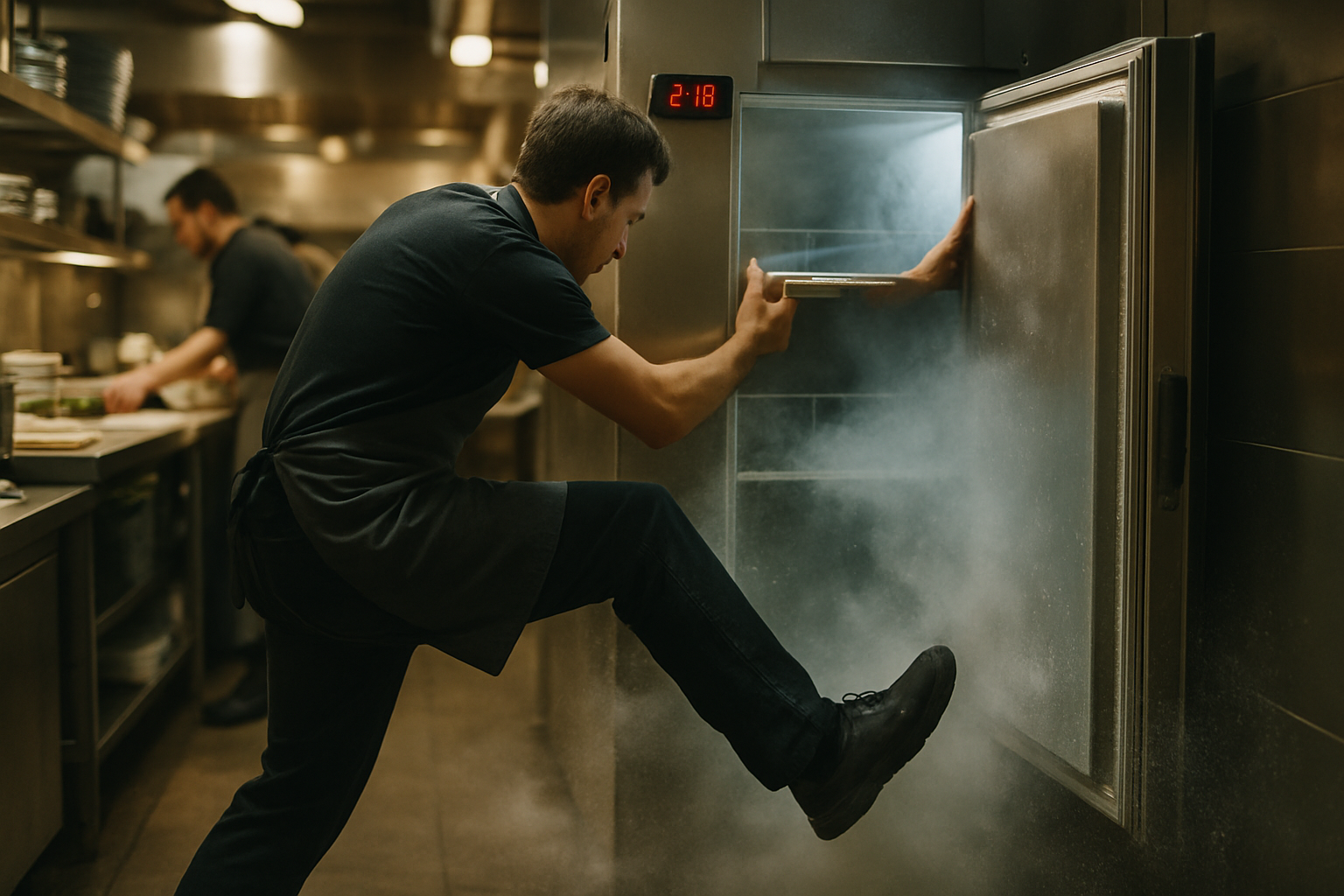
Equipment failure is the obvious threat, but it isn't the only one. A lot of temperature problems come from people, and a good monitoring system catches those too.
Picture a staff member restocking a freezer during a busy shift. They prop the door open, get pulled away, and leave it open for 20 minutes. The temperature climbs. It's not a hard failure, the compressor is fine, but the product spent time in the danger zone anyway. A beeper might not even trigger before the door closes and things cool back down.
Continuous monitoring reveals these events as patterns. If you see repeated warm spikes at the same time every morning, that points to a restocking habit, not a broken machine. The data turns a vague suspicion into something you can act on.
The shape of the data also tells you what kind of problem you have:
- Door left open: temperature spikes, then recovers once the door closes and the unit catches up.
- Compressor or equipment failure: temperature climbs steadily and does not recover, because nothing is pulling the heat back out.
That distinction is valuable. It tells you whether to call a repair technician or coach a staff member. Over time, using the logs to show your team what a propped door does to the numbers prevents repeat losses far better than a lecture. The system pays for itself not just by catching failures, but by changing behavior.
Temperature thresholds by use case
The right alarm thresholds depend on what you're storing and the rules you have to follow. Here's general guidance, but always confirm the exact numbers against your own regulations.
As a baseline, freezers are typically kept around 0°F (-18°C), and refrigerators around 34–40°F (1–4°C). Those ranges keep frozen product solid and refrigerated product out of the temperature range where bacteria multiply fastest.
Food service generally follows food safety guidelines that define safe cold-holding ranges. The concern is keeping perishable food out of the danger zone where pathogens grow. Your local health authority sets the specifics, and inspectors will expect you to hold and document those temperatures.
Medical and lab storage often carries tighter tolerances and stricter documentation requirements. Vaccines, reagents, and samples may need to stay within a narrow band, and a brief excursion can compromise them. Documentation is frequently mandatory, not optional.
Because requirements vary so much, an alarm should let you set custom high and low thresholds rather than locking you into one fixed range. What triggers an alert for a lab freezer is different from what triggers one for a restaurant reach-in. Set your thresholds to match your product and your rules, and confirm the exact requirements with the regulations that apply to your facility.
How remote alerts reach you when no one is on-site
The whole point of remote alerting is reaching the right person when the building is empty. A good system offers several notification methods so an alert can't slip through:
- Text message for immediate attention on any phone.
- Email for a written record and for people who watch their inbox.
- Mobile app push notifications for quick, at-a-glance status.
One contact isn't enough for nights and weekends. The best systems support escalation: if the first person doesn't respond, the alert moves on to a second or third contact. Someone always gets the message, even if the primary manager is asleep, off the grid, or on vacation.
Redundant contacts matter more than people expect. The failures that cost the most happen when coverage is thinnest, so having a backup list of recipients is what turns a system from a nice idea into real protection.
Good systems also alert you to problems with the monitoring itself, not just the temperature. If a sensor drops offline or loses connectivity, you want to know, because a silent sensor isn't the same as a safe freezer.
Why reading frequency matters
How often the system takes a reading shapes how useful it is. Infrequent readings leave gaps where problems hide. Frequent readings catch trouble earlier and reduce guesswork.
VitaTemp records temperature and humidity every 20 minutes. That cadence is frequent enough to catch a developing problem while it's still fixable, and to show the shape of an event clearly, whether it's a door left open or a compressor starting to struggle.
Frequent logging also builds a detailed record. When an inspector asks for your temperature history, or when you're troubleshooting why product went bad, a dense timeline of readings tells the story far better than a few scattered manual checks.
There's a practical trade-off between reading detail and battery life. Reading every few seconds would drain a battery fast; reading once a day would miss too much. A 20-minute interval balances useful detail against long, reliable operation.
Features to look for when buying a freezer temperature alarm
When you compare systems, weigh these features against your needs:
- Long, user-replaceable battery life. A sensor that dies quietly is worse than no sensor. VitaTemp batteries last about 10 years and you can replace them yourself, so you're not paying for service calls or facing surprise gaps in coverage.
- Wireless setup with no drilling or wiring. Sensors should install without damaging equipment or requiring a contractor.
- Humidity monitoring alongside temperature. Humidity affects product quality and can flag equipment issues before temperature does.
- Automatic data logging. Compliance records should build themselves, not depend on someone remembering to write numbers down.
- Customizable thresholds and multiple alert recipients. Set your own safe ranges and route alerts to a whole team.
- Reliable remote notifications. Text, email, and app alerts that actually arrive when it counts.
No single feature matters in isolation. A long battery is worth little without reliable alerts, and logging is worth little if you can't set thresholds that match your rules. Look for a system that covers all of these together.
Installation: no drilling, no wiring
Installation is where a lot of monitoring projects stall. Traditional wired systems mean holes in freezer walls or doors, cables run through the facility, and often an electrician or contractor on site. That's cost, downtime, and permanent modification to your equipment.
Wireless sensors avoid all of it. Because the system is wireless, there's no need to drill holes in insulated walls or doors, which protects the integrity of the unit and avoids condensation and efficiency problems that drilling can cause. No wiring means no electrician and no contractor.
A few placement tips help you get accurate readings:
- Position the sensor where it reflects the air the product actually sits in, not right next to the cooling element or the door.
- Keep it away from spots where warm air rushes in each time the door opens, unless catching those events is exactly what you want to measure.
- Give the wireless signal a clear path to reach the network.
Because there's nothing to wire, setup is quick. You can have monitoring running the same day rather than waiting on a scheduled installation.
Supporting food safety and regulatory compliance
Manual clipboard checks are the weak link in most compliance programs. Someone has to remember to check the temperature, write it down accurately, and do it consistently, including on the days everyone is slammed. Gaps and guesswork creep in, and inspectors notice.
Automated logging replaces that routine. The system records readings continuously and stores them, so your temperature history builds itself without anyone lifting a pen. When an inspection or audit comes, you have time-stamped records ready to show, not a clipboard with suspicious gaps.
That record is also valuable when something goes wrong. If you file an insurance claim for lost product, or you need to investigate what happened and when, a detailed temperature history is hard evidence. It can show that a freezer held temperature right up until a specific failure, or document exactly how long product was exposed.
Beyond compliance, automating records cuts labor and removes a common source of human error. Your staff spends less time on manual checks, and the checks that do happen are more accurate.
Choosing the right system for your facility
Match the system to your actual risk. Ask yourself: How valuable is the inventory in each unit? How strict are the regulations you answer to? How many hours a week is the building unattended? The higher those stakes, the more a real monitoring system earns its place over a basic beeper.
VitaTemp is built for exactly these situations. Restaurants protecting high-value perishable inventory, schools responsible for food service compliance, and medical labs with tight tolerances and documentation requirements all face the same core problems: catching failures fast, catching human error before it repeats, and proving compliance without endless manual logging. Wireless sensors, readings every 20 minutes, a roughly 10-year user-replaceable battery, humidity monitoring, and remote alerts to phone, email, and app cover all of it.
The next step is straightforward: get set up with wireless monitoring and remote alerts so the freezers watch themselves, and you hear about a problem while there's still time to fix it.
Frequently asked questions
What temperature should trigger a freezer alarm?
Freezers are typically kept around 0°F (-18°C), so an alarm is often set to warn when temperatures climb above that range. Refrigerators usually sit around 34–40°F. Medical and lab storage may require tighter tolerances. The right threshold depends on what you store and the regulations you follow, so choose a system that lets you set custom high and low limits and confirm the exact numbers with your applicable rules.
Can a freezer temperature alarm alert me when I'm not at the building?
Yes, if it's a wireless monitoring system rather than a basic built-in beeper. VitaTemp sends alerts by text message, email, and mobile app, so you get warned wherever you are. Alerts can escalate to multiple people if the first contact doesn't respond, which matters most during nights, weekends, and holidays when no one is on-site.
Does a wireless freezer alarm require drilling or professional installation?
No. Because the system is wireless, there's no need to drill holes in freezer walls or doors and no wiring to run, so you don't need an electrician or contractor. Sensors are placed where they read the air around your product accurately, and setup is quick enough to have monitoring running the same day.
How long does the battery last and can I replace it myself?
VitaTemp batteries last about 10 years, and they're user-replaceable. You won't need a service call to keep the sensor running, and you avoid the coverage gaps that come with sensors that die quietly.
Can the system tell the difference between a broken freezer and a door left open?
The data makes it clear. A door left open causes a temperature spike that recovers once the door closes and the unit catches up. Equipment failure causes a steady climb that doesn't recover. With readings every 20 minutes, the shape of the temperature history shows you which one you're dealing with, so you know whether to call a repair technician or coach your staff.
Do temperature logs help with food safety inspections?
Yes. Automated, time-stamped logs replace manual clipboard checks and give you a complete record to show inspectors and auditors. The same history is valuable during an insurance claim or an investigation, since it documents exactly how a unit performed and when any problem started.
Have Questions About VitaTemp?
Our team is here to help you with temperature monitoring solutions for your business.