
Dry storage rooms: the temperature and humidity zone most kitchens forget to monitor
Dry storage temperature and humidity: a compliance-focused guide to keeping dry goods safe
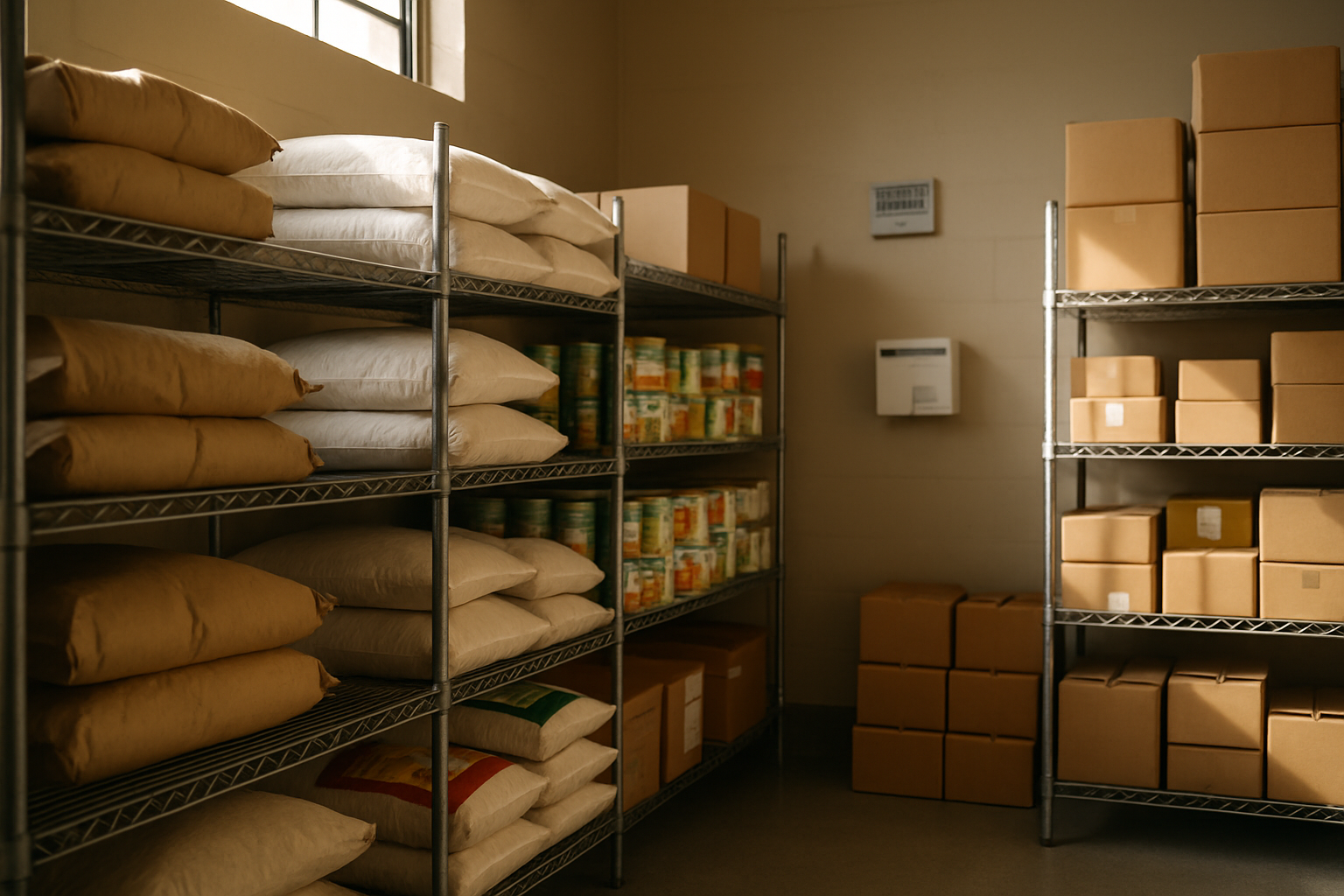
Dry storage often gets treated as the low-risk corner of a foodservice operation. Refrigerators and freezers get thermometers, logs, and alarms, while the dry storage room gets a shelf, a door, and a hope that shelf-stable means trouble-free. It doesn't. The temperature and humidity in that room quietly decide how long your flour, rice, canned goods, and dry mixes stay safe and usable.
This guide covers the reference ranges you need to hit, but it goes further than a list of numbers. Knowing the target isn't the same as knowing whether you're actually holding it hour after hour. The real challenge with dry storage temperature and humidity is that conditions drift without anyone watching, and the damage shows up only after it's too late to reverse.
Why dry storage temperature and humidity matter
Dry storage isn't just about keeping goods off the floor and away from splashes. The air around those products is doing something to them every hour of every day. Warmth speeds up chemical reactions that break food down. Moisture invites mold, softens packaging, and rusts cans. Even products stamped "shelf-stable" have a shelf life that assumes reasonable storage conditions, and that assumption fails fast in a hot, humid room.
The core problem is that most operations know their target ranges but never verify how the room behaves between checks. A single reading on a clipboard tells you one moment looked fine. It says nothing about the overnight heat soak, the humidity spike after a storm, or the afternoon the delivery door stayed propped for two hours. Getting dry storage right means pairing the right targets with an honest picture of what actually happens in the space.
Recommended temperature and humidity ranges for dry storage
For most dry goods, the widely accepted targets are:
- Temperature: 50–70°F (10–21°C)
- Relative humidity: below 60%, typically in the 50–60% range
The cooler and drier ends of those ranges generally extend shelf life. A dry storage room held steady around 60°F and 50% humidity will preserve product quality longer than one that hovers at 70°F and 60%, even though both technically fall within acceptable limits. Heat and moisture are cumulative stressors, so trimming them where you can pays off over months of storage.
Individual products can have their own preferences. Flour and grains are especially sensitive to moisture and clumping. Spices lose potency and color faster in heat and light. Canned goods tolerate a wider temperature band but suffer when condensation forms on the cans. Treat the general ranges as your baseline and tighten conditions for high-value or moisture-sensitive stock.
The most important framing: these are reference ranges to hold continuously, not boxes to check once a shift. A room that reads 65°F at 9 a.m. can be a different environment entirely by 4 p.m.
How poor conditions damage dry goods

When temperature and humidity slip out of range, the damage falls into three overlapping categories. Understanding each one makes it clear why steady conditions matter more than a single passing reading.
Mold and moisture damage
High humidity is the fastest route to spoiled dry goods. When relative humidity climbs above roughly 60%, grains, flour, and packaged goods can absorb enough moisture to support mold growth. You may not see it until a bag is opened and the damage is already done.
Moisture also causes clumping and caking in powders like flour, sugar, salt, and dry mixes, making them unusable even before mold appears. Cardboard and paper packaging soften and lose integrity. On canned goods, humid air condenses on cool metal surfaces, leading to rust that can eventually compromise seals and let contamination in.
Pest attraction
Warm, humid rooms are exactly what insects and rodents look for. Elevated temperature and moisture create hospitable conditions for pantry pests, and once packaging has been softened or damaged by moisture, those pests have easy entry points into product.
Pest activity is one of the most common and serious reasons a health inspection goes sideways. Evidence of rodents or insects in a storage area can trigger citations, product disposal, and follow-up visits. Controlling temperature and humidity is a quiet but effective part of pest prevention.
Spoilage and shortened shelf life
Heat drives chemical breakdown. Oils, fats, nuts, and products containing them go rancid faster as temperatures rise. Vitamins and other nutrients degrade, and color, flavor, and texture decline well before anything looks obviously spoiled.
That invisible quality loss has a real financial cost. Product that expires or degrades early gets thrown out, and inventory you thought would last for months turns over faster than planned. Over a year, a poorly controlled dry storage room can quietly waste a meaningful share of your dry goods budget.
Food safety regulations and inspection standards
The FDA Food Code directs operators to store food in a clean, dry location where it is protected from contamination and not exposed to conditions like splash, dust, or overhead leakage. While the Code sets specific temperature holding rules for potentially hazardous foods, dry storage is covered by the broader expectation that food be kept safe and protected from environmental damage.
Local health departments apply that expectation during inspections. Inspectors look at whether the storage area is clean and dry, whether products show signs of moisture or pest damage, and whether you can demonstrate that conditions are being managed. Temperature and humidity logs are how you show it. Documentation turns "we keep it cool and dry" into a defensible record.
If your operation runs on a HACCP plan, dry storage fits into your monitoring and record-keeping requirements alongside your cold holding steps. The same discipline you apply to refrigerator and freezer monitoring applies here: define acceptable ranges, monitor them, and record corrective actions when you deviate.
Schools and institutional foodservice often face additional layers of oversight. Cafeterias operating under federal nutrition programs may answer to state agency reviews on top of standard health inspections, which raises the value of consistent, complete records. Our guide to temperature monitoring for school cafeterias covers that environment in more detail.
Why dry storage conditions drift without anyone noticing
Dry storage rooms rarely fail dramatically. They drift, and the drift is easy to miss because it happens gradually or during hours no one is watching.
- Seasonal swings and HVAC cycling. Building climate control cycles on and off, and a room that's comfortable in spring can overheat in summer. Systems set back at night or over weekends let temperatures and humidity climb.
- Propped and frequently opened doors. During deliveries and stocking, storage doors stay open, letting warm, humid outside air pour in. A door propped during a long restock can undo hours of stable conditions.
- Poor air circulation and hot spots. Heat pools near ceilings and along exterior walls. A thermometer near the door may read fine while product on a top shelf against a sun-facing wall sits several degrees warmer.
- Equipment and building issues. A failing HVAC unit, a blocked vent, or a slow roof or plumbing leak can push conditions out of range for days before anyone connects the dots.
Because most of these happen off-hours or develop slowly, they slip past the person who glances at a thermometer once a day.
The limits of manual spot-checks
Manual logging is better than nothing, but its weaknesses are structural. Most operations check dry storage once or twice a day at best, usually during busy shift hours. That single reading captures one moment and tells you nothing about the sixteen-plus hours between checks, including every overnight and weekend.
Manual logs also depend on people. Readings get skipped during rushes, backfilled from memory, or taken from a thermometer that's been moved to a different spot. An inconsistent sensor location produces inconsistent data. And even when logs are perfect, they prove a moment, not a trend. An inspector or a HACCP review wants to see that conditions held, not that they happened to look right at 10 a.m.
The practical result is that problems get discovered the hard way: when someone opens a moldy bag, spots pest activity, or notices rust on a case of cans. By then the loss is already booked.
How continuous wireless monitoring closes the gap
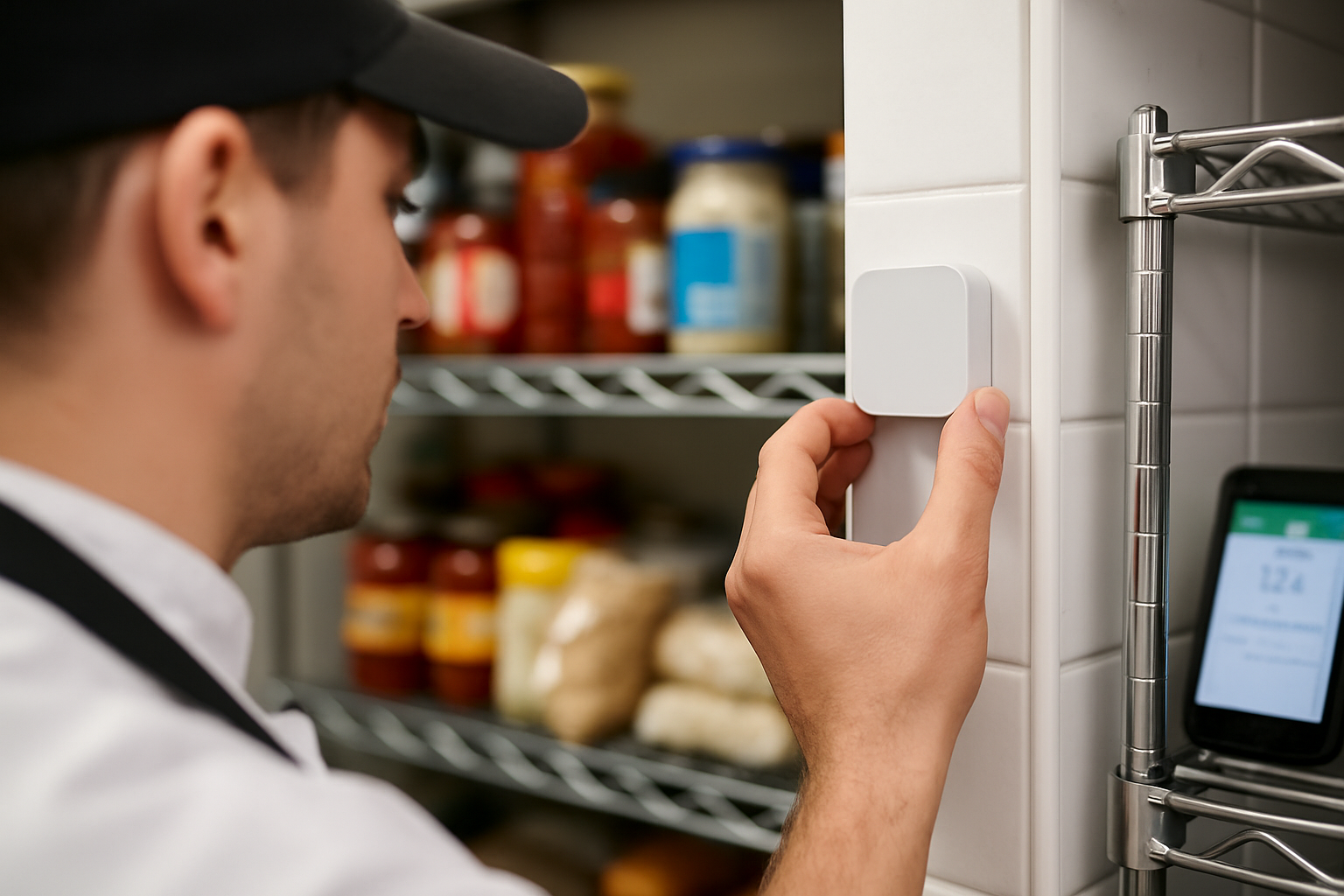
Continuous wireless monitoring replaces the daily guess with an actual record. Instead of one reading a day, a sensor takes temperature and humidity readings automatically every 20 minutes, day and night, weekday and weekend. You see the overnight heat soak and the post-delivery humidity spike that manual checks would never catch.
Because the sensors are wireless, there's no drilling or wiring to install them. You can place them exactly where trouble hides, such as top shelves, against exterior walls, or near doors, and move them as needed. The same placement thinking that matters in a walk-in cooler applies to dry storage: put the sensor where conditions are worst, not where they're easiest to check.
Battery life runs about 10 years and the battery is user replaceable, so the system isn't something you have to babysit. When readings drift outside your safe range, the system sends an instant alert so you can act before product is damaged rather than after. And every reading is stored, giving you a defensible historical record that answers an inspector's questions in seconds instead of shuffling through paper logs.
What to do when readings fall outside the safe range
An out-of-range alert is a prompt to investigate, not a reason to panic. Work through it methodically:
- Verify the reading and check sensor placement. Confirm the sensor hasn't been knocked into a hot spot, near a vent, or against a warm wall that would skew the reading.
- Look for obvious causes. Check for a propped or open door, a blocked or closed vent, or signs of a leak. Many excursions have a simple, immediate explanation.
- Protect at-risk product. If conditions have been out of range long enough to threaten moisture-sensitive stock, move it to a compliant area.
- Document the excursion and your corrective action. Record what happened, how long it lasted, and what you did. This is exactly the kind of record inspectors and HACCP reviews want to see.
- Escalate structural or equipment issues. If the cause is a failing HVAC unit, a blocked system, or a building leak, get maintenance involved before it turns into a recurring problem.
Using monitoring data to catch operational problems
Continuous data does more than flag one bad afternoon. Patterns over days and weeks reveal problems you'd never spot from single readings.
A temperature spike that appears at the same time every morning, right when deliveries arrive, points to a door being propped during stocking. A slow, steady upward drift over several weeks often signals an HVAC unit losing capacity before it fully fails, giving you time to service it on your schedule instead of during an emergency. Humidity that jumps every time it rains suggests a leak or a sealing issue in the room.
Reading these patterns lets you separate equipment failure from personnel behavior. If the room only overheats during specific shifts, that's a training conversation, not a repair bill. Monitoring data turns vague suspicions into evidence you can act on, and it gives staff a clear, factual basis for accountability around habits like closing doors and keeping vents clear.
Building a reliable dry storage monitoring routine
A dependable routine combines three things: known reference ranges, continuous monitoring that verifies you're holding them, and clear response steps for when you're not. Each piece is weak without the others.
Assign a specific person to own dry storage monitoring and to review data trends on a regular schedule, not just react to alerts. Keep your records organized and ready so an inspection is a non-event rather than a scramble. Most of all, treat dry storage with the same rigor you already apply to refrigeration. The products may be shelf-stable, but the money tied up in them and the safety of the people you serve deserve the same attention as anything in your coolers.
Frequently asked questions
What is the ideal temperature and humidity for a dry storage room?
Aim for a temperature between 50 and 70°F and relative humidity below 60%, typically in the 50–60% range. The cooler and drier ends of those ranges extend shelf life for most products. Moisture-sensitive items like flour and grains benefit from the drier end.
How often should dry storage temperature and humidity be checked?
Manual checks are usually done once or twice a day, but that leaves long gaps overnight and on weekends when conditions often drift. Continuous monitoring that records readings every 20 minutes gives a far more accurate picture and catches problems a daily spot-check would miss.
Does the FDA Food Code require dry storage temperature monitoring?
The Food Code requires food to be stored in a clean, dry location protected from contamination. While it doesn't set a single numeric dry storage temperature the way it does for cold holding, health departments and HACCP plans expect you to maintain and document safe conditions, which makes monitoring and record-keeping essential.
What humidity level causes mold in dry storage?
Mold risk rises significantly when relative humidity climbs above roughly 60%. Keeping humidity in the 50–60% range or lower helps prevent mold growth on grains, flour, and packaged goods, as well as clumping and package degradation.
Can wireless sensors monitor dry storage without damaging walls or shelving?
Yes. Wireless sensors install without drilling holes or running wires, so they don't damage walls or shelving. You can place them in trouble spots like top shelves or exterior walls and relocate them as needed, with a battery that lasts about 10 years and is user replaceable.
Have Questions About VitaTemp?
Our team is here to help you with temperature monitoring solutions for your business.