
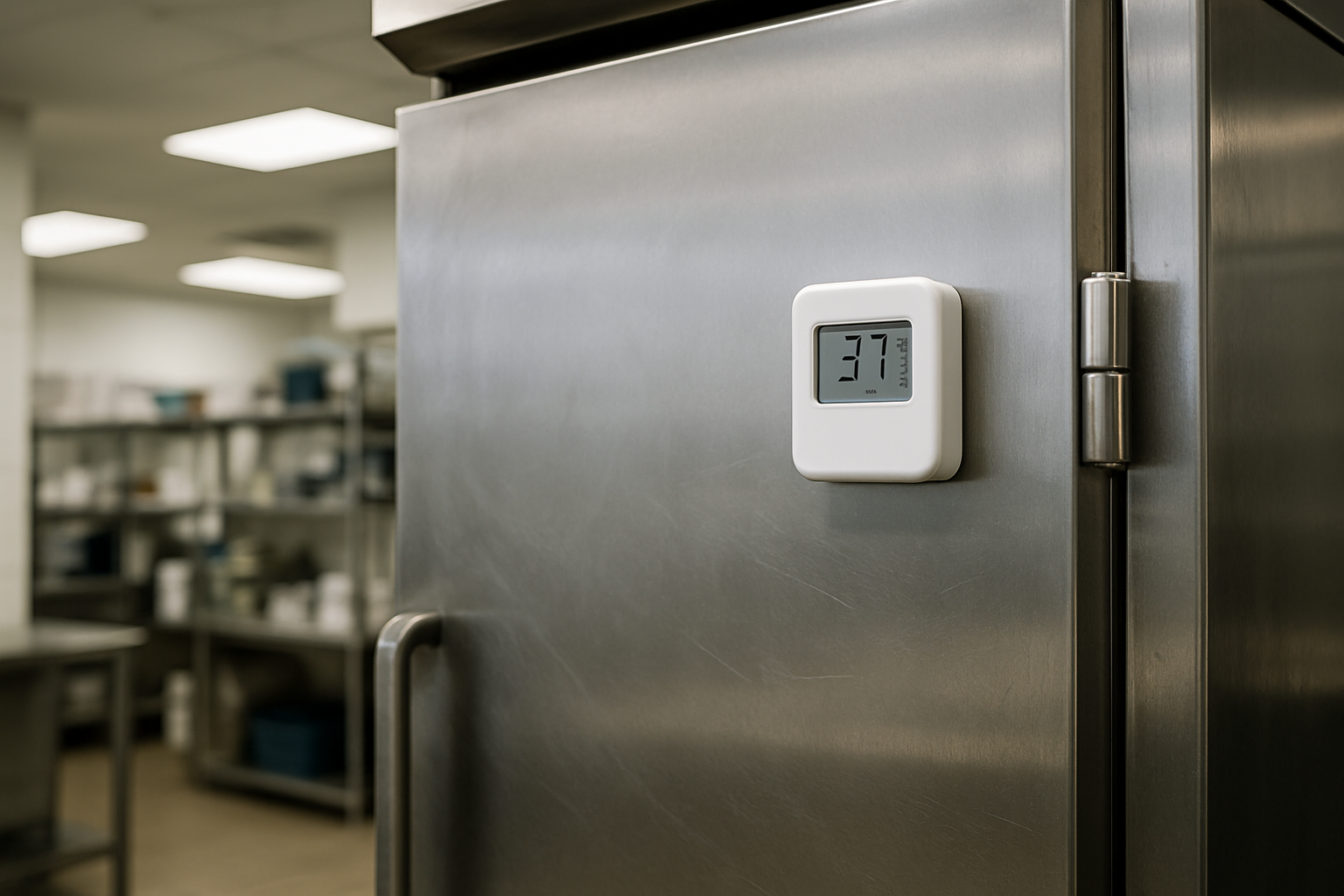
Temperature data loggers vs. real-time wireless monitoring: which does your kitchen or lab actually need?
Temperature data logger vs monitoring system: which one actually prevents loss?
If you're responsible for a cooler full of inventory, a freezer of irreplaceable samples, or a fridge holding vaccines, you've probably run into a choice: buy a simple temperature data logger, or invest in a full monitoring system. The two get lumped together because they both track temperature, but they solve different problems. One tells you what already happened. The other tells you what's happening right now, in time to do something about it. This guide walks through the real trade-offs so you can match the tool to the stakes.
The core difference in one sentence
A data logger records history for later review; a monitoring system watches conditions and alerts you in real time.
That's the whole distinction, and it matters more than any spec sheet. A logger is a record keeper. A monitoring system is a watchdog. Neither is objectively "better" — they're built for different jobs. If your goal is documenting that conditions stayed within range during a two-hour transport, a logger is perfect. If your goal is preventing thousands of dollars of loss when a compressor fails at midnight, a logger won't help, because nobody is looking at it. The rest of this article helps you decide which job you actually need done.
What is a temperature data logger and how does it work?
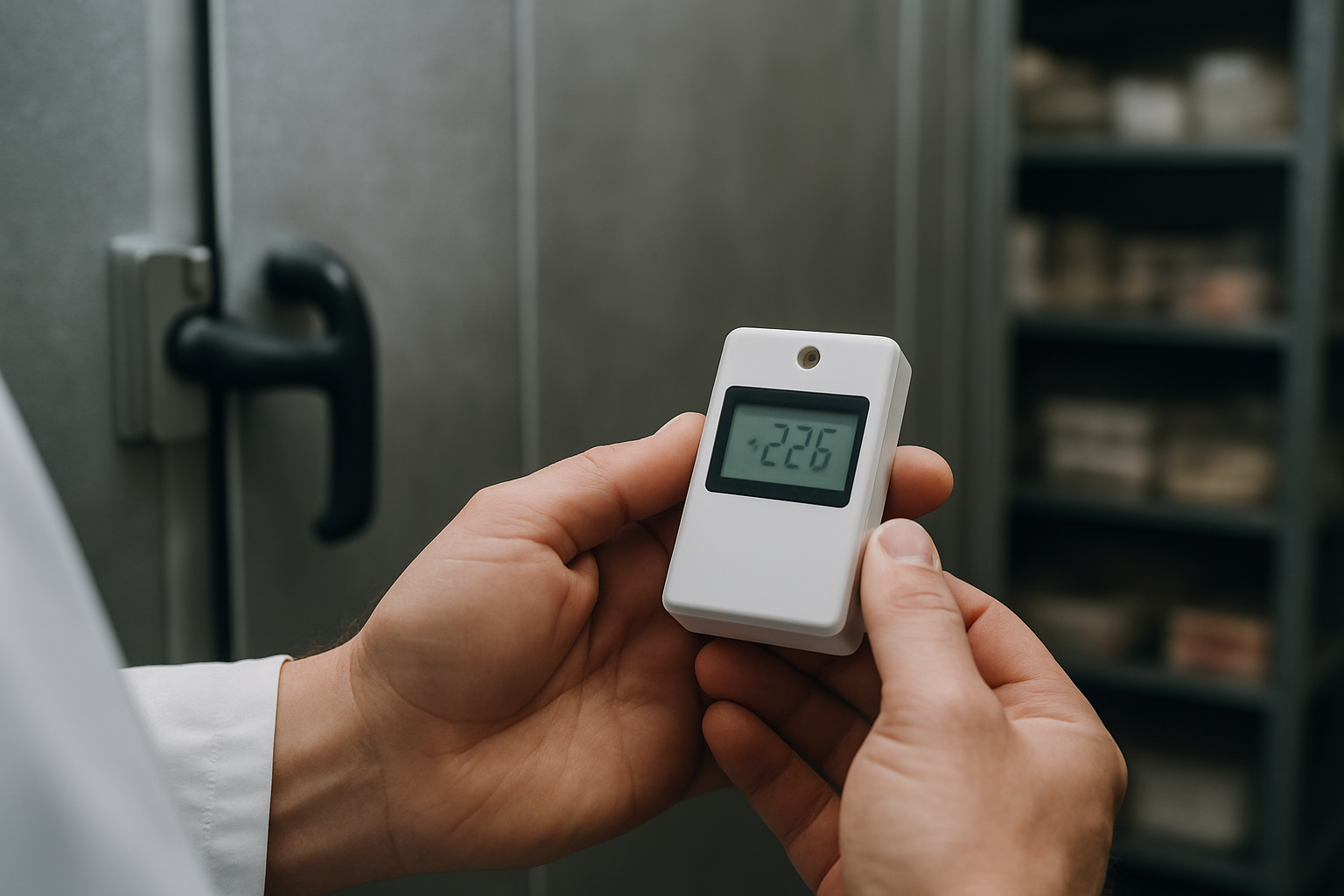
A temperature data logger is a standalone device that records temperature — and sometimes humidity — at set intervals. You place it where you want readings, set the logging frequency, and it quietly stores measurements to onboard memory.
The catch is in how you get the data out. With most loggers, you retrieve readings manually by plugging into a USB port, connecting a cable, or syncing to an app when you're standing next to the device. There's no live alerting. If the temperature spikes at 3 a.m., the logger dutifully records it, but you won't know until someone downloads and reviews the file — which could be days later, long after the damage is done.
That makes loggers well suited to specific jobs:
- Spot checks and short-term studies
- Transport monitoring, where the device travels with the product
- One-off validation to confirm a new unit holds temperature
Their strengths are real: low upfront cost, dead-simple operation, and no infrastructure to set up. For low-stakes or temporary needs, that simplicity is exactly the point.
What is a temperature monitoring system and how does it differ?
A temperature monitoring system uses networked sensors that transmit readings continuously to a dashboard or cloud platform. Instead of storing data for you to fetch, the system pushes it out — so the information comes to you.
The defining feature is real-time alerting. When a reading crosses a threshold you've set, the system sends a text, email, or app notification immediately. You don't have to be on-site or even awake. Because data lives in the cloud, you can check any sensor from any device, anytime.
Wireless options remove the biggest installation headache. There's no drilling holes or running cables through walls and coolers — the sensors communicate over the air. VitaTemp, for example, takes readings every 20 minutes and runs on a battery that lasts about 10 years and is user-replaceable, so once it's placed, it mostly takes care of itself.
Head-to-head comparison of the key features
Rather than declare a winner, it's more useful to walk through each decision factor honestly. The right choice depends on how much these differences matter to your operation.
Alerting and response time
This is where the two tools diverge most. A logger offers no warning until someone reviews the data after the fact. By then, an excursion is a historical record, not a problem you can fix.
A monitoring system flags trouble while there's still time to act. If a walk-in drifts warm, you get pinged and can move product, call for service, or prop the fixed door before the contents cross into the temperature danger zone. Response time is often the entire difference between saving inventory and throwing it out.
Connectivity and data access
Loggers require you to physically go to the device and pull the data. That's fine when the device is in front of you and inconvenient when it's in a freezer across town.
Monitoring systems push readings to the cloud for remote access. Consider the value of checking your walk-in cooler from home at 2 a.m. after a storm knocked out power to the block. With a logger, you're guessing until morning. With a monitoring system, you already know — and you've already been alerted if anything went wrong.
Cost, installation, and maintenance
Loggers win on sticker price. But that lower cost carries a hidden labor expense: someone has to physically check readings, download files, and file them, over and over. Multiply that by several units and multiple checks a day and the "cheap" option starts to add up.
Monitoring systems cost more upfront but demand far less ongoing effort. Wireless installation avoids construction, drilling, and downtime — you place sensors and go. Long battery life reduces maintenance too; with a 10-year, user-replaceable battery, there's no service visit just to keep the sensor running.
Accuracy and record-keeping
Both approaches can produce accurate readings, so accuracy isn't usually the deciding factor. Record-keeping is. A monitoring system builds a continuous, timestamped, tamper-resistant audit trail automatically — every reading, logged and stored without anyone lifting a finger.
A logger's record is only as reliable as the person responsible for it. If someone forgets to download the data, or the file gets lost, or the device sits unchecked over a long weekend, there's a gap. For anything tied to compliance, automatic and complete beats manual and hopeful.
When a standalone data logger is enough
A logger is the right call more often than product marketing admits. It's a genuinely good fit when:
- The monitoring is low-stakes or short-term
- You're doing transport tracking or a one-off validation study
- The budget is tight and you have staff available to check readings regularly
- A brief temperature excursion won't cause major loss
If you're validating that a new display cooler holds temperature over a week, or documenting a delivery run, a logger does exactly what you need without the overhead of a networked system.
When you need a real-time monitoring system
The equation flips the moment losses become expensive or the coverage gaps grow. Choose a monitoring system when:
- Inventory is high-value or samples are irreplaceable
- You need coverage after hours, on weekends, or during unattended periods
- Compliance rules require reliable audit records
- You're tracking multiple locations or many units at once
The common thread is exposure. If a failure you don't catch quickly turns into real cost, real-time alerting pays for itself the first time it saves a load. This is also why teams comparing a basic WiFi freezer alarm against cellular monitoring care about how alerts reach them when the network is down — the alert only helps if it actually arrives.
How real-time monitoring catches equipment and personnel problems
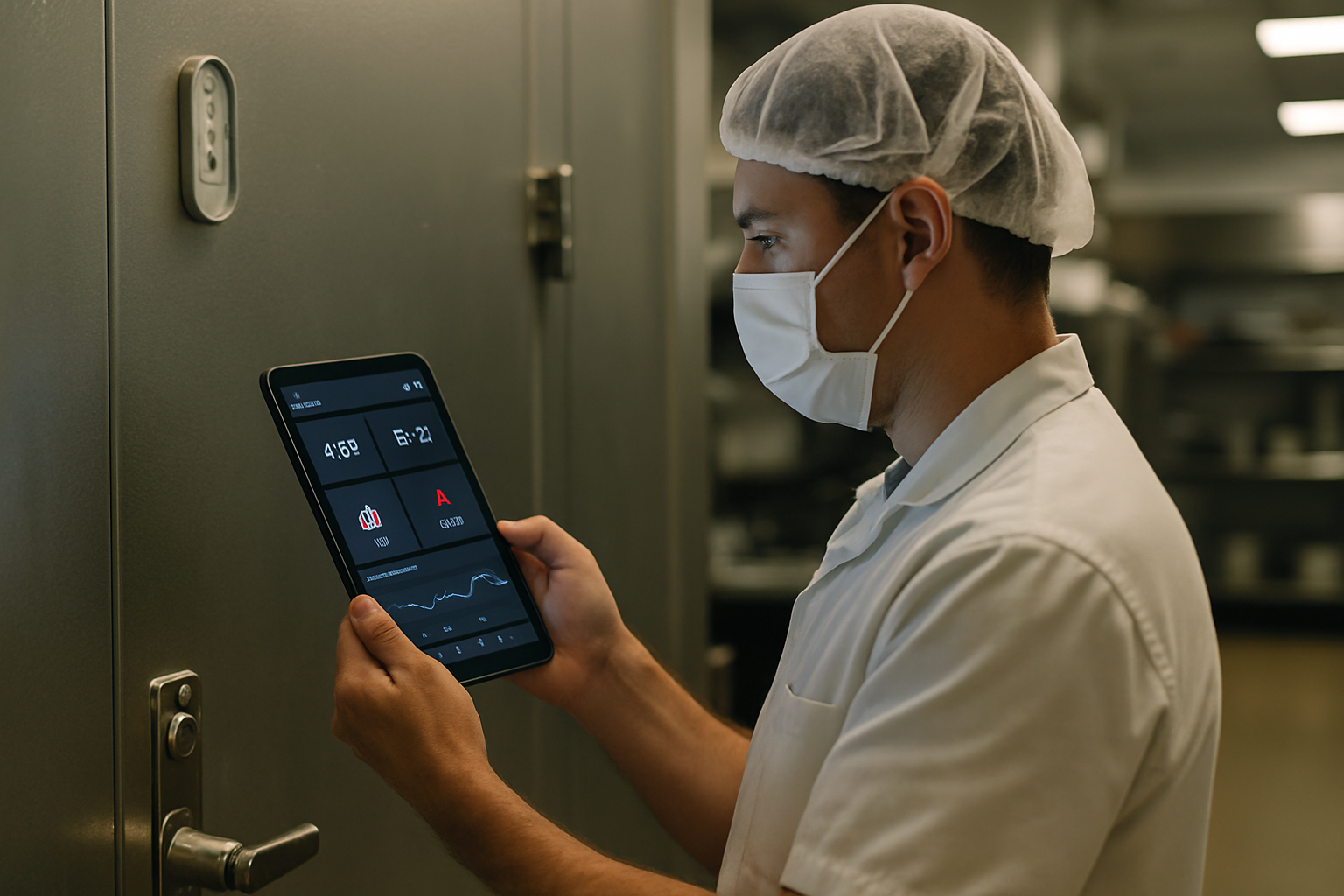
The best argument for monitoring isn't just the emergency alert — it's the pattern recognition that prevents repeat losses.
Watching trend data lets you spot a failing compressor before contents thaw. A unit that used to hold steady and now cycles a few degrees warmer each afternoon is telling you something. Catch that trend and you schedule service on your terms, not after a total failure.
Monitoring also catches personnel issues that a logger would only reveal in hindsight, if at all. A freezer door left open during stocking shows up as a slow, predictable warm-up at the same time every morning. Because the data is continuous and timestamped, you can distinguish equipment failure from human behavior. A steady climb overnight points to hardware. A daily spike at 7 a.m. points to the door.
That distinction is what actually prevents repeat loss. Once you can see who and what causes excursions, you can fix the real cause — retrain the crew, adjust the stocking routine, or replace the aging unit — instead of just replacing spoiled product again and again.
Compliance and audit support
For many operations, record-keeping isn't optional. Restaurants and food service work under HACCP plans that require temperature documentation. Clinics storing vaccines follow VFC and similar guidance with strict logging expectations. Labs answer to standards built around sample integrity and tight tolerances.
Across all of these, automatic and timestamped records make inspections and audits far smoother. Instead of scrambling to reconstruct logs, you pull a complete history on demand. A monitoring system's continuous trail also reduces the risk of missing entries that manual logging invites. If you're managing vaccine refrigerator monitoring or documenting food cooling procedures for HACCP, that automatic paper trail is a practical advantage — treat this as general guidance and confirm the specific requirements that apply to your facility.
Choosing the right option for your setting
The right tool comes down to three things: how high the stakes are, how many hours need coverage, and how strict your compliance demands are.
Schools. Cafeteria coolers, milk reach-ins, and nurse-office vaccine fridges all need tracking, but staff are stretched thin and can't babysit logs all day. Real-time monitoring fills the coverage gap, especially over weekends and breaks. Our guide to temperature monitoring for school cafeterias digs into this.
Restaurants. Walk-ins, prep lines, and after-hours risk add up fast, and a failed health inspection is costly. Monitoring protects overnight inventory and creates the records inspectors want. Don't overlook the dry storage zone many kitchens forget to monitor either.
Medical labs. Reagents and samples sit under tight tolerances with strict compliance, and a single excursion can ruin work that can't be redone. Real-time alerting and automatic records aren't a luxury here. See our wireless monitoring guide for lab freezers.
Quick checklist: if the stakes are low, coverage is short, and no one's auditing you, a logger works. If any one of high value, unattended hours, or compliance applies, choose real-time monitoring.
Frequently asked questions
Can a data logger send alerts like a monitoring system?
Most standalone loggers can't. They record to onboard memory and rely on you to download and review the data. Some newer models add limited connectivity, but true real-time alerting — a text or email the moment a threshold is crossed — is the defining feature of a monitoring system, not a logger.
Do wireless monitoring systems require drilling or cabling to install?
No. Wireless systems like VitaTemp use sensors that transmit readings over the air, so there's no drilling holes or running cables through cooler walls. You place the sensor where you need it and it starts reporting, which avoids construction and downtime.
How long do the batteries last in a wireless temperature monitor?
It varies by system. VitaTemp sensors run about 10 years on a battery that you can replace yourself, so there's no service call just to keep the sensor powered. Long battery life is a big part of what keeps ongoing maintenance low.
Is a monitoring system worth the higher cost for a small business?
Often, yes — it depends on your exposure. If a single overnight failure could spoil enough inventory to exceed the system's cost, real-time alerting pays for itself the first time it catches a problem. If your stakes are genuinely low and staff check readings reliably, a logger may be enough.
Which option is better for vaccine storage compliance?
A real-time monitoring system is generally the stronger fit. Vaccine storage guidance emphasizes continuous, timestamped records and prompt response to excursions, which automatic monitoring handles far more reliably than manual log downloads. Always confirm the specific requirements that apply to your clinic.
Have Questions About VitaTemp?
Our team is here to help you with temperature monitoring solutions for your business.