
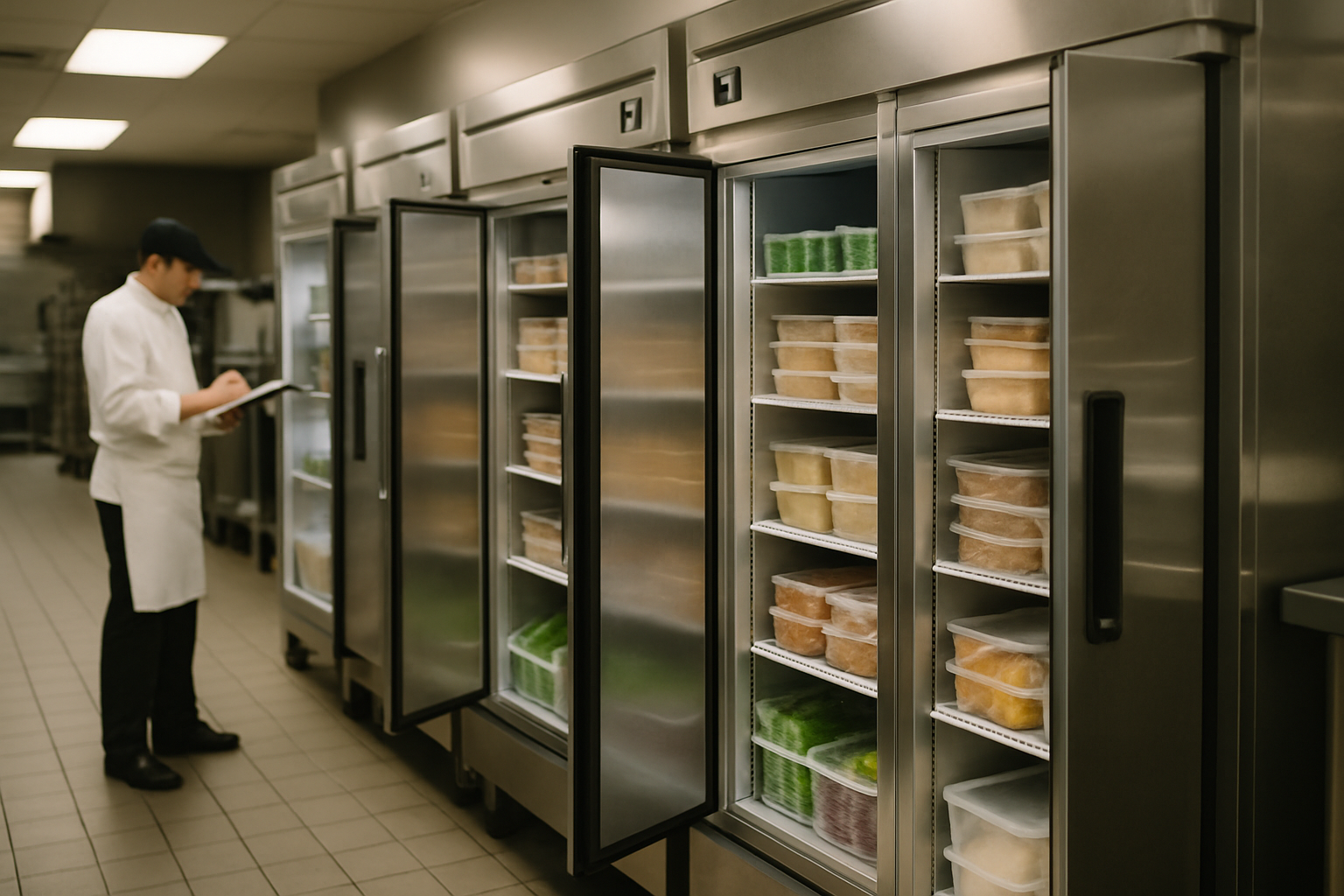
Cold chain monitoring for caterers and off-site food service: keeping cold food safe from kitchen to event
Cold chain temperature monitoring devices: a practical buyer's guide
If you store vaccines, produce, prepared food, or lab samples, the temperature inside your coolers and freezers is your inventory's lifeline. A few hours in the wrong range can spoil thousands of dollars of product or put you out of compliance. Cold chain temperature monitoring devices exist to catch those problems early, but the market is crowded with options that range from paper charts to fully wireless sensor networks.
This guide walks through what these devices actually do, how the main types compare, and which features matter when you're deciding what to buy. It also covers something most vendor listicles skip: how continuous monitoring reveals staff habits, not just failing equipment.
What a cold chain temperature monitoring device does
A cold chain temperature monitoring device is a sensor that records the temperature, and often the humidity, inside a cooler, freezer, refrigerator, or storage room at set intervals. Instead of relying on someone to walk over and read a thermometer, the device captures readings automatically and stores them so you have a continuous record.
Depending on the system, those readings are logged on the device, transmitted to a gateway, or sent directly to the cloud over cellular or WiFi. From there you can review trends, pull reports, and receive alerts the moment a temperature crosses a threshold you've set.
The reason continuous monitoring beats spot checks is simple: temperature problems rarely happen when someone is looking. A freezer can drift out of range overnight, over a weekend, or during a busy stocking shift, and a twice-daily manual reading will miss it entirely. Automatic monitoring closes those gaps.
The operations that depend on these devices span industries: pharmaceutical labs protecting reagents and samples, food distributors managing bulk cold storage, restaurants safeguarding inventory, healthcare facilities storing vaccines, and schools keeping cafeteria coolers compliant. Different settings, same core need: know the temperature at all times and be told fast when something goes wrong.
Types of monitoring devices and how they compare
There are three broad categories on the market, and each carries different trade-offs in cost, effort, and reliability. Understanding them makes it easier to see why wireless sensors have become the low-maintenance modern choice for most operations.
Wired dataloggers
Wired dataloggers are accurate and dependable, but they come with strings attached, literally. Many require running cable to a data hub or a nearby power source, and installation often means drilling through cooler or freezer walls to route the wiring.
That drilling raises installation costs and can disrupt operations while the work is done. It may also compromise the insulation or void the equipment warranty. Some models store data locally, which means someone has to physically retrieve the logger or connect to it to pull readings, and that reintroduces the manual step monitoring is supposed to eliminate.
Wired dataloggers make sense in fixed installations where wiring is already in place and where a single, high-value unit justifies the setup. For multi-unit or multi-site operations, the installation burden adds up quickly.
Chart recorders
Chart recorders are the traditional paper-based option, and plenty of facilities still use them because auditors recognize the round paper discs. A stylus traces temperature onto the chart over a 24-hour or 7-day cycle.
The problems are practical. Charts require consumables, someone has to change and file them, and reviewing them is a manual chore. Worse, they offer no real-time alerting, so a chart recorder can faithfully document a temperature excursion that nobody notices until the product is already lost. Gaps happen when charts aren't swapped on time, and a missed excursion buried in a stack of paper does nothing to protect inventory.
Wireless sensors
Wireless sensors solve most of the headaches above. There's no drilling and no wiring run, so you can place a sensor where readings are most accurate and move it later if your setup changes. Readings are taken on a schedule, for example every 20 minutes, and transmitted automatically for remote review.
Because the data flows to the cloud, alerting is built in: the system notifies you the moment a threshold is crossed, wherever you are. The long-term hassle drops significantly, especially when the hardware is designed for years of unattended operation. For most schools, restaurants, labs, and clinics, wireless sensors deliver the best balance of accuracy, coverage, and low maintenance.
Features that matter most when choosing a device
Every spec sheet lists dozens of features. These are the ones that actually change how well a system protects your inventory, framed as the decisions you'll be making.
Reading frequency
How often a device records determines how fast it catches trouble. A sensor that reads once an hour can miss a short excursion, like a freezer door left open during a 15-minute stocking run. More frequent readings paint a clearer picture and catch brief spikes.
There's a trade-off, since very frequent readings consume more battery and generate more data. A 20-minute interval is a practical sweet spot for most cold storage, giving enough detail to spot real problems without draining the device. Our refrigerator temperature monitoring guide goes deeper on choosing intervals by storage type.
Wireless vs wired installation
Wireless installation avoids drilling holes, which protects both your equipment's insulation and its warranty. It also lets you deploy across many units and multiple sites without scheduling an electrician. If you're outfitting a dozen reach-ins, a walk-in, and a couple of freezers, wireless turns a multi-day project into an afternoon.
Battery life and maintenance
Battery life is often overlooked until the first replacement cycle. Devices with short-lived batteries create a recurring chore and risk data gaps when a battery dies unnoticed. Look for long battery life, up to about 10 years, so the sensor essentially runs itself.
Equally important is whether the battery is user-replaceable. A user-replaceable battery means no service call, no shipping the unit back, and no downtime. You swap it yourself in minutes and keep monitoring.
Alerting and notifications
Real-time alerts are the whole point of continuous monitoring. The system should notify you by text, email, or app the instant a reading crosses a high or low threshold. Just as important is where those alerts go: they need to reach someone who can act. Escalation paths ensure that if the first person doesn't respond, the alert moves up the chain so a failing freezer at 2 a.m. doesn't sit unaddressed. Our freezer temperature alarms guide covers alerting setups in more detail.
Humidity tracking
For some inventory, humidity matters as much as temperature. Certain pharmaceuticals, produce, and dry storage areas degrade in the wrong humidity. A sensor that tracks both temperature and humidity in one unit gives a fuller picture of storage conditions without adding a second device.
How wireless install saves time and money
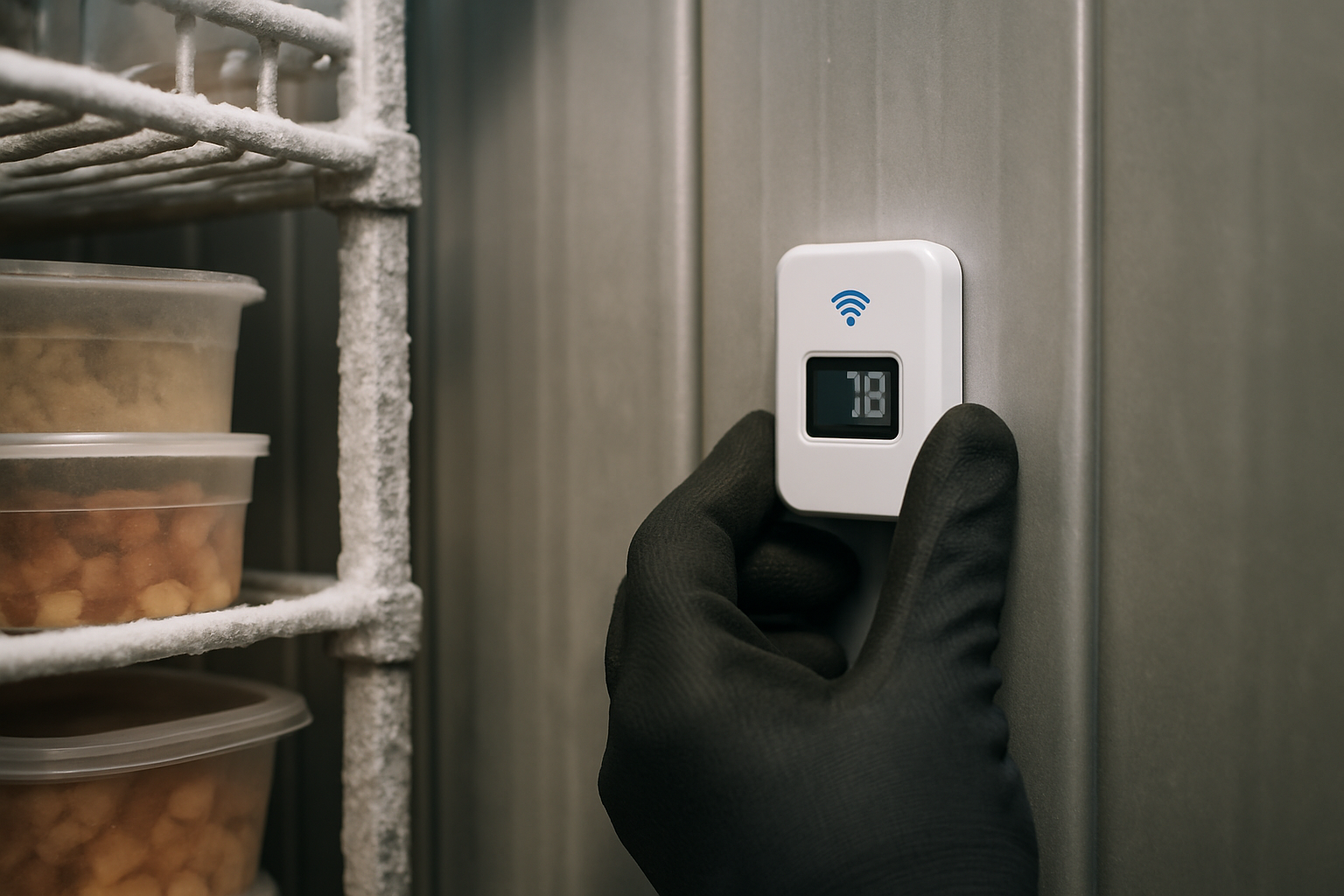
The installation savings with wireless systems are concrete. There's no drilling, no wiring runs, and no downtime while equipment is opened up. A sensor goes where you need it and starts reporting.
That flexibility pays off over time, too. When you rearrange storage, add a freezer, or open a new location, you place or move sensors without recabling anything. Across many units and multiple sites, the difference in installation cost between wireless and wired systems is substantial, often the deciding factor for operations managing more than a handful of coolers.
Catching personnel issues, not just equipment failures
Here's the angle most buyer guides ignore. Continuous data doesn't only tell you when equipment fails; it tells you how your team works.
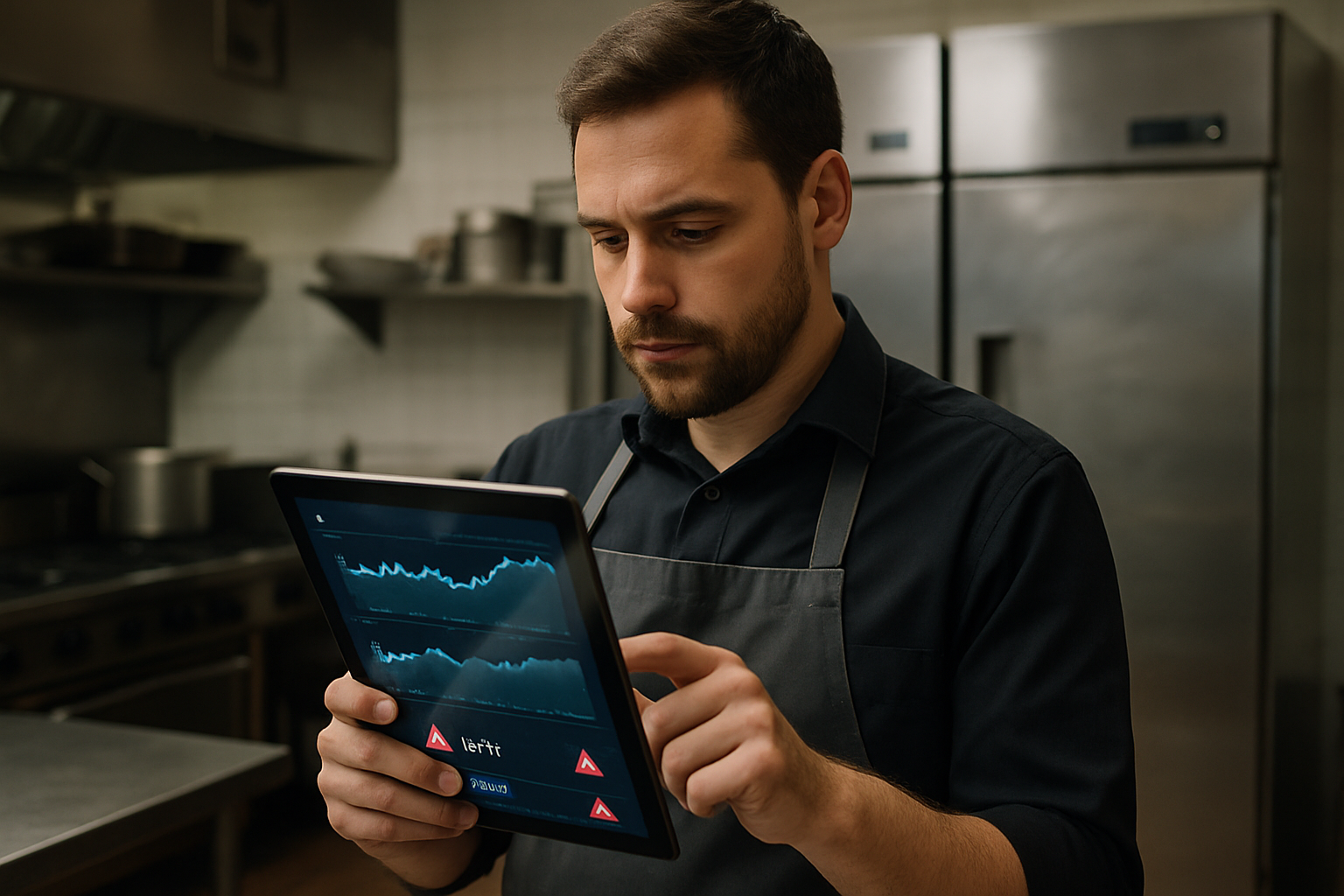
A failing compressor shows up as a slow, steady climb in temperature. A freezer door left open during stocking shows up as a sharp spike at the same time every delivery day, followed by a recovery once the door closes. The pattern is the tell. Repeated, human-caused spikes look completely different from gradual equipment decline, and once you can see them you can act on them.
That data becomes a coaching tool. If a walk-in spikes every Tuesday morning during produce delivery, you have a procedure problem, not a hardware problem. A restaurant might discover the reach-in near the line drifts up during dinner rush because staff prop it open. A school cafeteria might find the milk cooler warms every morning during restocking, which our school cafeteria monitoring guide addresses directly. A lab might catch a sample freezer that spikes whenever someone reorganizes racks. In each case, the fix is training, not a repair bill.
Compliance and recordkeeping needs these devices help meet
For many operations, monitoring isn't optional, it's a regulatory requirement, and the device's records are what auditors want to see.
Food operations working under HACCP need documented temperature control at critical points, and continuous logs make proving that straightforward. Our guides on HACCP cooling procedures and the temperature danger zone explain the food-safety side in depth.
Facilities handling FDA-regulated, temperature-sensitive products need reliable records that a product stayed in range. Healthcare providers storing vaccines have specific monitoring and logging requirements under programs like VFC, covered in our vaccine refrigerator monitoring guide.
The common thread is that automatic, tamper-resistant logs simplify every audit. Instead of hunting through paper charts, you export a clean report showing exactly what happened and when.
How often temperature should be recorded
The right recording frequency balances detection speed against data volume and battery life. Read too rarely and you'll miss short excursions; read constantly and you'll burn battery for little added benefit.
For most cold storage, intervals around 20 minutes catch problems well before inventory is at risk while keeping devices running for years. The key is that frequent, automatic readings detect a door left open or a unit starting to fail long before a twice-daily manual check would.
Always align your recording frequency with the regulatory expectations for your inventory. Some vaccine and pharmaceutical programs specify minimum logging frequencies, so confirm your device meets or exceeds those.
Total cost of ownership to weigh before buying
Sticker price is only part of the picture. Weigh the full cost over the device's life.
- Upfront hardware and installation. Wired systems often cost more to install; wireless systems keep this low.
- Ongoing fees. Most cloud-based systems carry a subscription for data storage, alerting, and reporting.
- Battery replacement and maintenance. A device with a 10-year, user-replaceable battery costs far less to maintain than one needing frequent service.
- Cost of avoided losses. The real return is the spoiled inventory you never lose and the compliance failures you never have to explain.
Setting alert thresholds and choosing who gets notified
Set high and low thresholds per storage type. A vaccine fridge, a walk-in cooler, and a -80 freezer each have different safe ranges, so thresholds shouldn't be one-size-fits-all. For very cold storage, see our lab freezer monitoring guide.
Use buffer or delay settings to avoid false alarms. A brief spike from a normal door opening shouldn't trigger a 2 a.m. call, but a temperature that stays out of range for a set number of minutes should.
Finally, assign recipients and escalation paths. Decide who gets the first alert, who gets it next if there's no response, and who covers after hours. A system that keeps alerting even when the internet drops matters most during nights and weekends when nobody is on-site.
Choosing the right device for your operation
Match the device to your site. A single high-value freezer has different needs than a distributor running cold storage across several buildings. Factor in inventory value, compliance requirements, and how many units you're covering.
For multi-unit and multi-site operations especially, prioritize wireless, low-maintenance systems that install without drilling and run for years on a single battery. Before you buy, compare options against a short checklist:
- Reading frequency that catches short excursions
- Wireless install with no drilling
- Battery life measured in years, user-replaceable
- Real-time alerts with escalation
- Temperature and humidity in one sensor if needed
- Automatic, exportable logs for your compliance standard
- Reliable alerting when the internet or power is down
Getting sensor placement right matters too; our guide on where to place a sensor in a walk-in cooler shows how location affects accuracy.
FAQs
What is the difference between a datalogger and a wireless temperature sensor?
A datalogger records readings and often stores them on the device, sometimes requiring you to retrieve it or connect to it to pull data, and many need wiring. A wireless sensor takes readings on a schedule and transmits them automatically for remote review and real-time alerting, without cables or manual data retrieval.
How often should cold storage temperatures be recorded for compliance?
It depends on your inventory and applicable regulations, but frequent intervals such as every 20 minutes catch short excursions well before product is at risk. Always confirm the minimum logging frequency your standard, such as HACCP or a vaccine program, requires and choose a device that meets or exceeds it.
Do wireless monitoring sensors require drilling or special installation?
No. Wireless sensors avoid drilling and wiring runs. You place the sensor where it reads accurately and it starts reporting, which also protects your equipment's insulation and warranty and makes deployment across many units fast.
How long do the batteries last and can I replace them myself?
Battery life varies by device, but long-life sensors can run up to about 10 years. Look for user-replaceable batteries so you can swap them yourself in minutes without a service call or downtime.
Can temperature monitoring show whether staff left a freezer door open?
Yes. A door left open produces a sharp, recurring spike at predictable times, often during stocking or deliveries, followed by recovery once it closes. That pattern looks distinctly different from the slow climb of failing equipment, so continuous data lets you spot the behavior and coach staff on procedures.
What compliance standards do these devices help satisfy?
They support HACCP for food safety, FDA requirements for temperature-sensitive products, and vaccine storage programs like VFC in healthcare. Automatic, tamper-resistant logs make audits and reporting far simpler than paper charts or manual readings.
Have Questions About VitaTemp?
Our team is here to help you with temperature monitoring solutions for your business.